
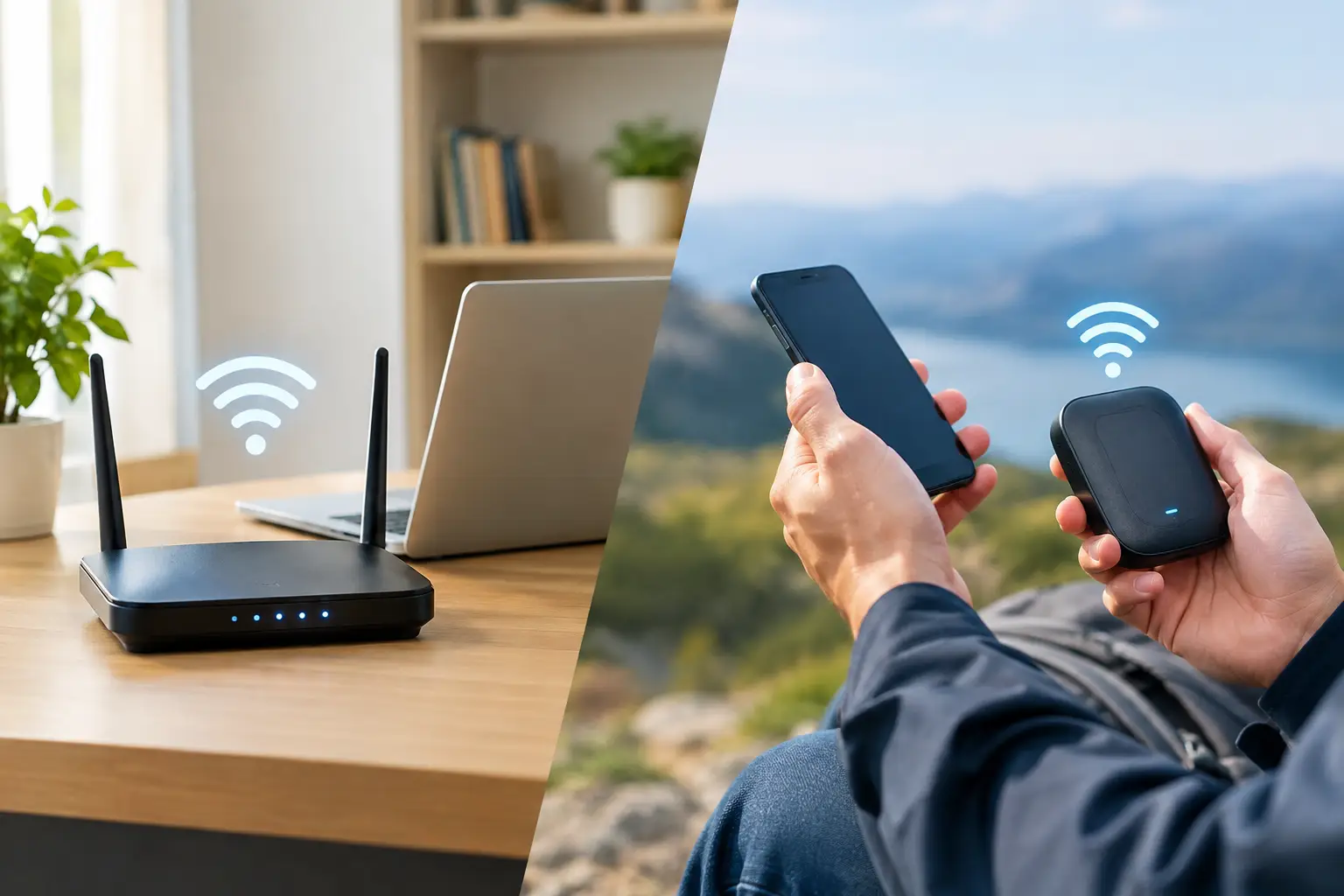
A video call freezes just as you need to speak. The kids are streaming in one room, someone is downloading a game in another, and your phone hotspot suddenly feels like it is carrying the whole house on its back. The choice between mobile hotspot versus home broadband matters most when your connection has to serve more than one person, one device, or one quick task.
A hotspot can be an excellent tool for travel, temporary service, and light internet use. Home broadband is built for the everyday demands of a connected household or small business. The right choice comes down to where you use the internet, how many people rely on it, and how much consistency you need.
Mobile Hotspot Versus Home Broadband at a Glance
A mobile hotspot turns a cellular signal into Wi-Fi. It may come from your smartphone through tethering or from a dedicated hotspot device with its own mobile plan. It is portable and quick to set up, provided you have a strong cell signal.
Home broadband is a fixed connection installed at your home or business. Depending on local availability, it can run through cable, fiber-connected infrastructure, fixed wireless, or another local network solution. It is designed to support regular, high-volume use across many devices.
| What matters most | Mobile hotspot | Home broadband | | — | — | — | | Best use | Travel, backup internet, temporary setups | Everyday home, remote work, entertainment, business | | Location | Works wherever cellular coverage is strong | Works at the installed address | | Data use | Often limited or slowed after a plan threshold | Commonly offers unlimited data options | | Devices | Best for a few devices | Built for multiple devices at once | | Speed consistency | Can change with signal and network traffic | Generally more stable for regular use | | Setup | Fast, usually no installation | Requires service availability and installation |
The biggest difference is not simply speed. It is capacity. A mobile connection is shared with nearby cellular users and can vary by time of day, weather, distance from a tower, and building materials. A home connection is intended to be your household’s main internet service, with equipment and plan speeds selected for that job.
When a Mobile Hotspot Makes Sense
A hotspot is a practical choice when mobility is the priority. If you work between job sites, spend time at a cottage, travel frequently, or need internet while waiting for a home installation, it can keep you connected without relying on public Wi-Fi.
It can also work well for light, single-person use. Checking email, browsing, sending documents, joining an occasional video call, and handling basic online banking do not always require a fixed home connection. In an area with excellent cellular coverage, a modern 5G hotspot may even feel fast for short periods.
For rural households, a hotspot can be useful where wired options are limited or while you are comparing available services. It is also a smart backup connection for a home office. If a fixed service goes down during an important workday, tethering a laptop to a phone may be enough to send files, answer messages, or join a critical meeting.
The trade-off is that hotspot performance can be unpredictable. A phone may show several bars of service but still struggle when the local network is busy. Indoor signal can be weaker than outdoor signal, and moving the device a few feet can change results. A hotspot battery can also drain quickly, especially when several devices are connected.
Why Home Broadband Is Better for Most Households
For a family home, home broadband is usually the clear choice. Streaming in 4K, video calls, online classes, cloud backups, smart home cameras, gaming consoles, and connected TVs all use bandwidth. Any one activity may work on a hotspot, but several happening at once can create delays and frustration.
A fixed home plan provides a more dependable foundation. With speeds from 100 Mbps up to 1 Gbps where available, households can choose service based on how they actually live online rather than trying to conserve every gigabyte. Unlimited data is especially valuable for families who stream often, download large updates, or work remotely.
Consistency matters for more than entertainment. Video meetings need stable upload performance. Online gaming benefits from lower latency and a connection that does not fluctuate during peak hours. Security cameras and smart devices need a reliable network that stays connected after everyone leaves the house. Home broadband is designed to support those daily demands without turning internet use into a negotiation over who gets online first.
For small businesses, the case is even stronger. A retailer processing payments, a contractor sending estimates, or a home-based professional hosting calls needs an internet connection that is available day after day. A mobile hotspot is a valuable emergency option, but it should not be the only connection supporting customer service, business software, and staff devices.
Watch the Data Rules, Not Just the Advertised Speed
A hotspot plan may advertise unlimited data, but the details matter. Some plans reduce speeds after a certain amount of high-speed use. Others prioritize traffic differently when the cellular network is busy. Video streaming may be limited to a certain quality, and data shared through phone tethering can have a separate allowance.
That does not make mobile service a bad option. It simply means the plan needs to match the job. A household that streams movies every night, downloads console updates, and uses several laptops can use hundreds of gigabytes in a month. A hotspot that seems affordable at first may become slower or more expensive once regular usage begins.
With home broadband, ask whether data is unlimited and whether the advertised speed is appropriate for your home. A 100 Mbps plan can be a strong fit for many smaller households. Larger families, frequent gamers, and homes with multiple remote workers may benefit from faster tiers. The best plan is not always the biggest one. It is the one that leaves enough room for your busiest evening without paying for capacity you will never use.
Consider Reliability in Your Exact Location
Coverage is local. One side of town may have excellent cable service, while a rural road a few miles away may need a different solution. Cellular coverage can also change dramatically between the driveway, the kitchen, and a home office in the basement.
Before choosing a hotspot as your primary internet, test it where you will actually use it. Check the connection in the rooms where you work, stream, and study. Test it at different times, including evenings, when cellular networks can be busier. Pay attention to upload speed and video-call quality, not only a single download speed test.
Before ordering home broadband, confirm service availability for your exact address. Local providers can explain which network options are available, what installation involves, and which speed tier suits your household. In Southwestern Ontario communities and rural areas, that local knowledge can save time and prevent surprises.
S-Connect helps households compare available internet options with straightforward guidance, including plans designed for everyday streaming, work, gaming, and connected living. The goal is not to push every home into the same package. It is to find service that performs where you live.
A Simple Way to Decide
Choose a mobile hotspot as your main connection if you need portability, use modest amounts of data, live alone or have few connected devices, and have proven strong cellular service at home. It can also be the right short-term answer when you are moving, renovating, or waiting for installation.
Choose home broadband if your internet supports a household, remote work, online learning, gaming, regular streaming, smart devices, or a small business. It is the better long-term value when reliable performance and unlimited use matter more than being able to take your connection on the road.
Many homes benefit from both: broadband as the primary service and a mobile hotspot as a backup for outages or travel. That combination gives you dependable everyday capacity without leaving you disconnected when plans change.
Start with your real usage, not the lowest advertised price. Count the people, devices, work calls, streams, and downloads that depend on your connection, then choose the service that will still feel reliable on your busiest night.