
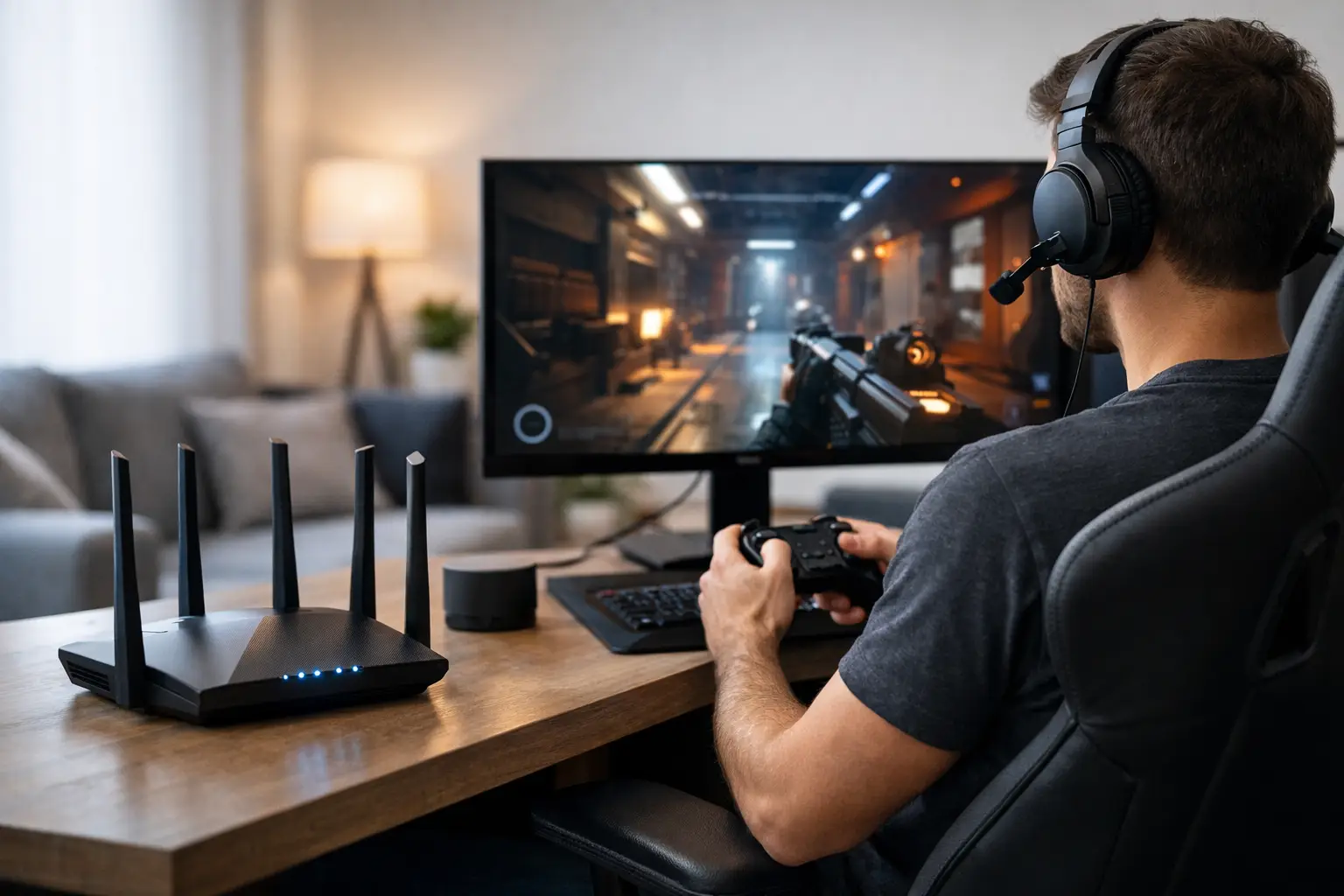
That last-second lag spike during a ranked match usually has nothing to do with your controller, your console, or your reflexes. More often, it comes down to your connection. If you’re shopping for the best internet for gaming at home, the real goal is not just fast download speeds. You need stable performance, low latency, enough bandwidth for the whole household, and a plan that keeps up when everyone is online at once.
What actually makes the best internet for gaming at home?
Gaming households often get sold on one number: Mbps. Speed matters, but it is only part of the picture. A 1 Gig connection with unstable performance can feel worse than a lower-speed plan with consistent latency and solid in-home setup.
For online gaming, latency is usually the biggest factor. Latency is the delay between your action and the server response. Lower latency means more responsive gameplay. That matters in shooters, sports games, racing titles, and any game where timing decides the outcome.
Stability matters just as much. If your internet drops for a few seconds, spikes in ping, or gets congested every evening, gaming becomes frustrating fast. That is why the best internet for gaming at home should be judged by three things working together: speed, low latency, and reliability.
Upload speed also deserves more attention than it gets. If you stream gameplay, use voice chat, upload clips, or have remote workers and students in the house, stronger upload capacity helps keep everything running smoothly. It is easy to focus on download speeds alone, but modern homes use both directions constantly.
How much speed do gamers really need?
Most online games do not require massive raw speed on their own. In many cases, gaming itself uses less bandwidth than 4K streaming. A single gamer can often play comfortably on a 100 Mbps connection if the line is stable and the rest of the home is not competing heavily for bandwidth.
Where higher-speed plans help is in shared households. If one person is gaming, another is streaming movies, someone else is in a video call, and smart devices are always connected, a faster plan gives everyone room to breathe. That is why plan selection should reflect the full household, not just the gamer.
A 100 to 300 Mbps plan can be a strong fit for smaller homes or lighter internet use. For busier households with multiple users, 500 Mbps to 1 Gig often makes more sense. The right choice depends on how many people are online, what they are doing, and whether your gaming setup is wired or wireless.
If you are in a rural area, available technology can shape your decision. Some locations have fewer wired options, so consistency and local support become even more important. The best plan on paper is not always the best plan in practice if coverage is uneven in your area.
Fiber, cable, and rural internet for gaming
Fiber is often seen as the top option for gaming, and for good reason. It usually delivers very low latency, strong reliability, and excellent upload performance. If true fiber is available at your address, it is often one of the best choices for serious gamers.
Cable internet can also be an excellent option for gaming at home, especially when it offers strong speeds, unlimited data, and reliable local infrastructure. For many households, cable provides the right mix of performance and availability. A well-supported cable connection can handle online gaming, streaming, downloads, and everyday home use without issue.
Rural internet is a more mixed category. Some rural services perform well for general browsing and streaming but may be less ideal for competitive gaming if latency is high or signal conditions vary. That does not mean rural customers are out of luck. It means they should ask sharper questions about real-world performance, evening slowdowns, and whether the service is suitable for fast-paced online play.
If you are comparing service types, do not stop at advertised speed. Ask how the connection performs during peak hours, whether unlimited data is included, and what kind of local support is available if something needs attention.
Why unlimited data matters for gaming homes
Game downloads are huge now. Updates can be huge too. Add cloud backups, streaming platforms, video calls, and connected devices, and a home can burn through data faster than expected.
Unlimited data removes one more thing to worry about. You should not have to think twice before downloading a major title, updating a console, or letting the kids stream while you play. For gaming households, unlimited plans offer practical value, not just convenience.
This is especially true in homes where internet is doing double or triple duty. Work, school, entertainment, and gaming all compete for the same connection. A capped plan may look cheaper at first, but it can become restrictive fast.
Your Wi-Fi setup can make a good plan feel bad
A lot of internet complaints that sound like provider issues are actually in-home Wi-Fi issues. If your console or PC is far from the router, behind thick walls, or sharing a congested wireless band with many devices, performance can suffer even if your plan is strong.
For the best gaming experience, a wired Ethernet connection is still the gold standard. It gives you a more stable link and often lower latency than Wi-Fi. If wiring is not practical, router placement matters. Put the router in a central, open area, not tucked in a basement corner or behind furniture.
Modern routers also make a difference. Older hardware can struggle with multiple connected devices or fail to deliver the speeds you are paying for. In larger homes, Wi-Fi extenders or mesh systems may help, especially if gaming happens upstairs, downstairs, or in a detached space.
This is one reason many households prefer a provider that offers straightforward installation help and responsive support. The service is only as good as the experience in your actual home.
How to choose the right gaming internet plan
Start with your household size. A solo gamer with light home usage has very different needs than a family of five with multiple screens, work calls, and smart devices. Then think about how you play. Casual console gaming and occasional downloads are one thing. Competitive gaming, streaming, and content uploads are another.
Next, look at reliability in your area. Coverage and infrastructure matter. A provider that understands your local community and can clearly explain what is available at your address will usually save you time and frustration.
After that, compare practical features. Unlimited data, installation support, transparent pricing, and easy access to customer service all make a difference. Fast internet sounds great in an ad, but dependable service is what matters on game night.
For households across Southwestern Ontario, this local piece matters more than people think. Service quality can vary by neighborhood, town, and rural route. A regional provider like S-Connect can be a strong option for homes that want high-speed internet with straightforward support, flexible package ranges, and coverage designed for both town and rural customers.
Signs your current internet is holding gaming back
If your ping jumps every evening, if party chat cuts out, or if downloads slow the whole house down, your current plan may not match your usage anymore. The same goes for homes that added more devices over time but never upgraded the connection.
Another common problem is choosing too little speed to save money, then dealing with constant frustration. There is a balance to strike. You do not need to overbuy, but you also do not want a plan that struggles every time multiple people go online.
A good provider should help you choose based on your real needs, not just push the biggest package. That is especially important for families, students, and remote workers who need internet that can handle everything at once.
The best internet for gaming at home depends on your household
There is no single perfect plan for every gamer. The best internet for gaming at home depends on how many people use the connection, what kind of games you play, whether you are wired or on Wi-Fi, and what is actually available where you live.
For some homes, a reliable 100 or 300 Mbps plan with unlimited data is more than enough. For others, especially larger households or heavy users, 500 Mbps to 1 Gig is the better fit. The smartest choice is the one that gives you consistent performance without paying for capacity you will never use.
If you are shopping for gaming internet, focus on the full experience: low latency, reliable coverage, unlimited data, and support that is easy to reach when you need it. When those pieces come together, gaming at home feels the way it should – fast, smooth, and frustration-free.
The right internet plan should disappear into the background and let you enjoy the game.