
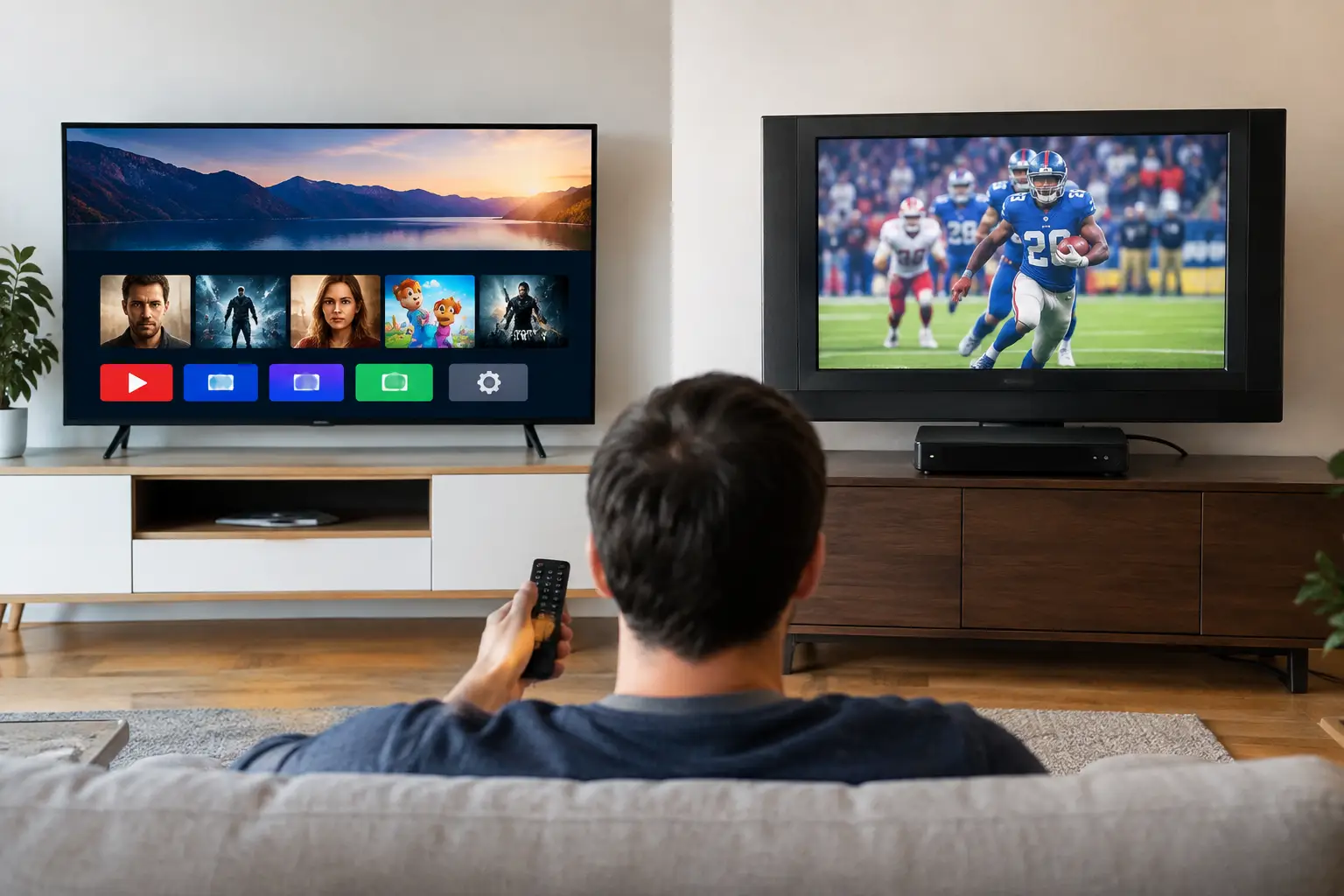
The television choice in your living room now depends as much on your internet connection as it does on the channels you watch. In the debate over IPTV versus traditional cable TV, the better fit is not always the newest option. It is the service that matches how your household streams, watches live events, manages its budget, and expects support when something needs attention.
For families, remote workers, students, and small businesses, TV service should be straightforward. You want clear picture quality, the channels you actually use, dependable performance, and a setup that does not turn into a weekend project. Here is what separates IPTV from cable and how to make a confident decision.
IPTV Versus Traditional Cable TV: The Main Difference
Traditional cable TV delivers programming through the same type of coaxial cable network that has served homes for decades. A cable box or compatible TV receives a scheduled lineup of live channels, often with on-demand content and recording features included through the provider.
IPTV, short for Internet Protocol Television, delivers live channels and on-demand programming through an internet connection. It is not the same as opening a separate streaming app for every show. A managed IPTV service brings television channels, guides, on-demand content, and features together in one TV experience, typically through a set-top box or supported device.
That delivery method changes the experience. Cable is built around a dedicated TV signal. IPTV relies on available broadband capacity and a well-managed home network. When your internet plan and in-home setup are up to the task, IPTV can provide a modern, flexible alternative without making television more complicated.
Picture Quality Depends on More Than the Screen
Both cable and IPTV can deliver sharp HD programming, and availability of 4K content depends on the channel, program, equipment, and service package. The real question is how consistently that quality reaches your TV.
Cable has a practical advantage for homes with unreliable internet. Because its television signal is separate from your Wi-Fi activity, a busy online gaming session or a large file download usually will not affect the picture on a cable channel. For viewers who primarily watch live TV and want a familiar, independent setup, that can be reassuring.
IPTV quality is tied to the connection serving your home. A reliable high-speed plan is especially valuable if multiple people are streaming, video calling, gaming, and watching TV at the same time. Wired connections for TV equipment can help, while strong whole-home Wi-Fi matters when devices are connected wirelessly.
This is why speed is only part of the conversation. Consistency matters just as much. A household with dependable unlimited internet and a properly placed router may enjoy IPTV without interruptions. A home at the edge of available coverage, or one using an older router in a large house, may need a network check before switching.
Channel Choice and Features
Cable remains a familiar choice because the experience is predictable. Turn on the TV, open the guide, and browse channels. Many customers appreciate that simplicity, particularly when they want local stations, news, sports, and popular networks in one place.
IPTV can offer a similar channel-guide experience while adding more flexibility to the way television is delivered. Depending on the package, customers may have access to replay features, on-demand libraries, cloud-based recording, multi-device viewing, and easier equipment options. These features are useful for families whose schedules do not line up with a program’s airtime.
Neither service automatically replaces every subscription. Streaming platforms may still be separate, and sports rights, regional channels, premium networks, and recording rules can vary by package. Before comparing prices, write down the channels and events your household considers non-negotiable. A lower-priced plan is not a value if it drops the local news, kids programming, or game coverage you watch every week.
Live Sports and Local Programming
Live sports make people cautious about changing TV providers, and reasonably so. A delayed stream, missing regional network, or unfamiliar app is frustrating when the game is already underway. Managed IPTV is designed for live-channel viewing, but channel availability must always be confirmed for your address and package.
Cable can be the more comfortable option for viewers who want an established linear-TV experience with minimal dependence on their home network. IPTV can be a strong choice for households that want live sports and local programming alongside on-demand convenience. The deciding factor is not the label on the service. It is the actual channel lineup, equipment, and connection available where you live.
Reliability: Look at the Whole Setup
Cable TV and IPTV can both be reliable, but they face different points of failure. Cable can be affected by line damage, neighborhood outages, aging equipment, or signal issues. IPTV can be affected by an internet outage, weak Wi-Fi, overloaded home networks, or device problems.
For IPTV, a dependable internet plan is the foundation. If several people in the home are online at once, choose capacity that leaves room for everyone. A 100 Mbps connection may work well for many households, while larger families, serious gamers, home offices, and heavy streamers may benefit from faster options. Gig-speed service is not required simply to watch TV, but it can provide extra breathing room for busy connected homes.
Local support also matters. When service is not working as expected, customers need plain answers about whether the issue is in the home, on the network, or with a device. That is where a provider that understands regional coverage and offers installation assistance can make the process less stressful. S-Connect helps households across Southwestern Ontario assess available connectivity and choose services that fit their location, not just a generic online estimate.
Cost: Compare the Full Monthly Picture
The advertised monthly rate is only the beginning. Whether you choose IPTV or cable, ask about equipment, installation, recording features, premium channels, taxes, promotional pricing, and any term requirements. Compare the total monthly cost based on the channels and features you will actually use.
IPTV may create value when it is bundled with home internet, especially for households that already need fast, unlimited data. One provider, one bill, and coordinated support can be more convenient than managing separate TV and internet companies. Cable bundles can also be competitive, particularly where existing cable service is strong and the desired TV package is already available.
Avoid paying for a huge lineup just because it looks impressive on paper. If your household watches a small group of channels plus a few streaming services, a more focused package may be the smarter long-term choice. On the other hand, families that regularly watch news, specialty channels, live sports, and children’s programming may find that a broader package earns its place.
Which Service Fits Your Household?
Traditional cable TV may be the better option if you want a familiar TV setup, prefer your television service to operate separately from internet activity, or live in an area where broadband options are limited. It can also suit viewers who simply want live channels without adding new devices or changing routines.
IPTV may be the better option if you already have reliable high-speed internet and want a more flexible TV experience. It is particularly appealing for connected households that want on-demand options, recording features, and the convenience of bundling services. For remote workers and families with several devices online, the key is choosing an internet plan that supports the entire home, not just the television.
There is no need to guess based on broad claims about what is “better.” Start with your address, your must-have channels, the number of connected devices in your home, and the level of support you expect. A quick coverage and package conversation can reveal whether IPTV or cable will give your household the more dependable everyday experience.
The best TV choice is the one that lets movie night, game day, and weekday routines happen without extra hassle. Choose the service built for the way your home is connected now, with enough room for the way you will use it next.