
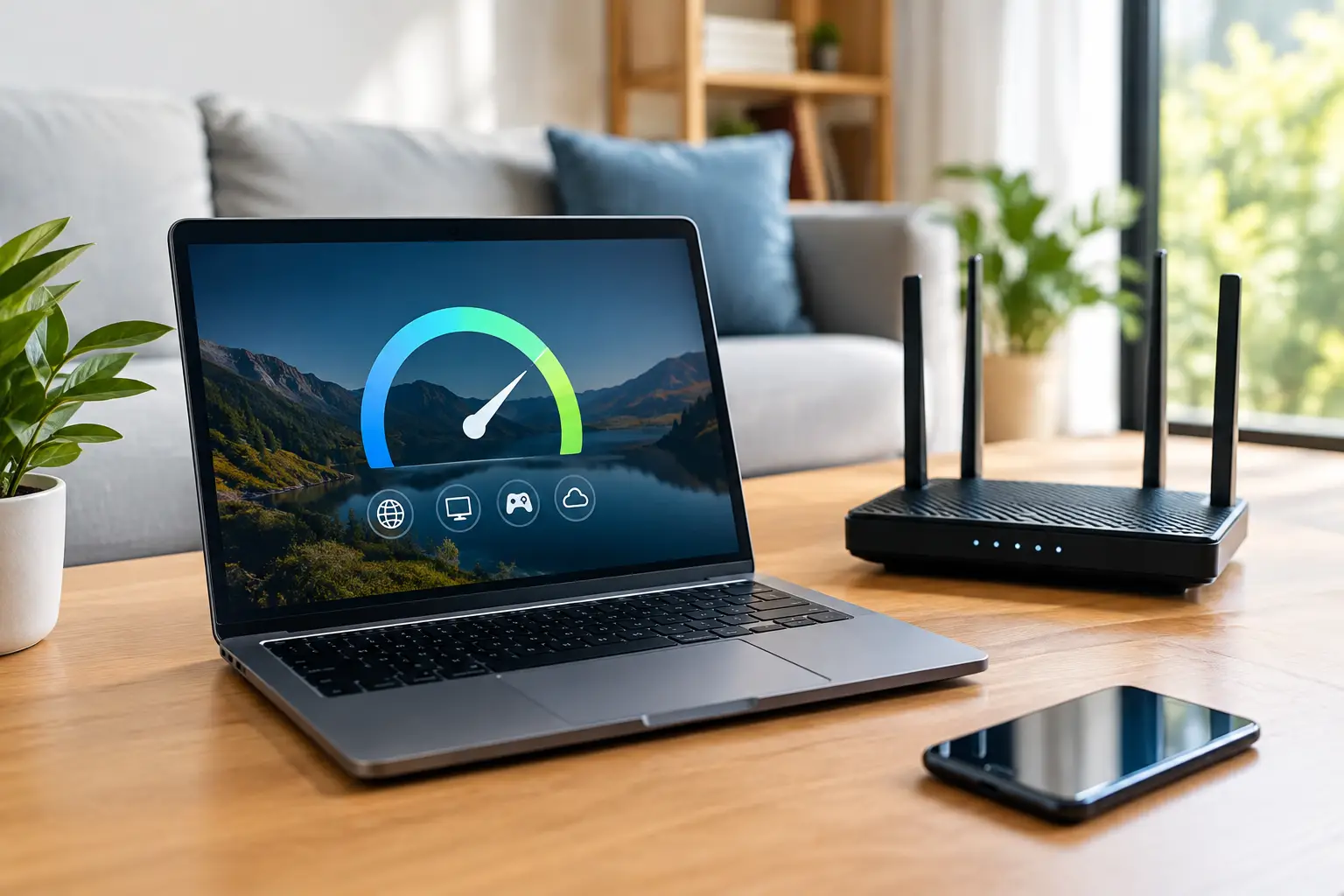
A 100 Mbps connection once felt like more than enough for a typical household. Now, one home may have a video meeting in the office, a 4K movie playing in the living room, an online class at the kitchen table, and a game updating in a bedroom – all at the same time. That is why home internet speed trends are no longer just about chasing the biggest number on a plan. They are about making every connected moment work without the spinning wheel, frozen call, or lag spike.
For households across Southwestern Ontario, the right service depends on how many people are online, what they do online, and how reliably the connection reaches every room. Faster plans have become more common, but higher speeds are only part of the story.
Home Internet Speed Trends Are Moving Beyond Download Speeds
Download speed still matters. It determines how quickly devices can pull in movies, game files, software updates, webpages, and social media content. But the way households use internet service has changed. More people are creating and sending data as well as receiving it.
Remote workers upload presentations, share large files, and join video calls. Students turn in assignments through online portals and use live learning tools. Security cameras send video feeds to cloud storage. Families back up photos automatically from multiple phones. These everyday activities make upload capacity more noticeable than it was a few years ago.
This does not mean every household needs the highest available tier. A couple who browse, stream in HD, and check email may be very comfortable with 100 Mbps. A busy family with multiple streamers, gamers, smart home devices, and work-from-home schedules will usually benefit from more room to spare. Plans in the 300 Mbps to 1 Gbps range are increasingly popular because they reduce the chance that one heavy activity affects everyone else.
The key trend is simple: households are choosing speed based on simultaneous use, not one device at a time.
The Connected Home Uses More Bandwidth Than It Used To
Internet use is not limited to laptops and televisions anymore. A connected home can include phones, tablets, gaming consoles, smart TVs, doorbell cameras, thermostats, speakers, watches, and voice assistants. Many of these devices use very little data on their own, but together they create a constant baseline demand.
Streaming quality is also rising. HD streaming is common, 4K content is widely available, and live sports, events, and news increasingly arrive through streaming apps rather than traditional cable channels. A single 4K stream can use a meaningful share of a lower-speed plan, especially when several people are online at once.
Gaming has added a different kind of pressure. Downloading a new game or major update can require dozens of gigabytes, making faster download speeds valuable. During gameplay, though, responsiveness matters more than raw speed. Gamers need low latency, stable Wi-Fi, and a connection that does not slow down when another person starts a video call.
That is why unlimited data is a major part of the value conversation. Households should be able to stream, work, learn, game, and update devices without checking a usage meter at the end of the month.
Why upload speed and latency deserve attention
A plan can look fast on paper and still feel frustrating if the connection struggles with real-time activity. Upload speed affects video calls, cloud backups, livestreaming, security cameras, and sending large files. Latency is the brief delay between an action and the response from the network. Lower latency can make a noticeable difference in online gaming, video meetings, and voice calls.
For a household that mostly watches shows and browses websites, download speed will remain the main priority. For remote workers, content creators, online students, and gamers, it makes sense to ask about the complete connection experience. The best plan is not simply the fastest advertised option. It is the plan that fits the way your household actually uses the internet.
Wi-Fi Is Now Part of the Speed Conversation
Many customers upgrade their internet plan and expect every device to become instantly faster. Sometimes that happens. Other times, the real issue is Wi-Fi coverage inside the home.
Your internet service brings speed to the modem or gateway. Wi-Fi distributes that connection to devices throughout the house. Thick walls, older equipment, long layouts, basements, detached offices, and interference from nearby networks can weaken the signal. A device close to the router may perform perfectly while a device two rooms away struggles.
This is especially relevant in larger homes and rural properties, where a workshop, home office, or finished basement may sit far from the main equipment. Moving the router to a central location can help. So can using current Wi-Fi equipment, adding a mesh system where needed, or connecting stationary devices such as desktop computers and game consoles with Ethernet cables.
Before assuming you need a faster plan, test the connection near the router and then in the rooms where performance feels poor. If speeds are strong near the equipment but weak elsewhere, better in-home coverage may solve the problem more effectively than a speed upgrade alone.
Rural Internet Expectations Are Catching Up
For years, rural households had fewer choices and had to make more compromises. That is changing as providers expand access through existing infrastructure, cable coverage, fixed wireless options, and fiber-adjacent network relationships. Availability still varies by road, neighborhood, and address, but the expectation has changed: rural customers should not have to settle for internet that cannot support modern life.
Reliable high-speed access matters for more than entertainment. It supports remote employment, online education, telehealth appointments, small business operations, and connection with family. For farms and home-based businesses, dependable internet can also support cloud tools, payment systems, monitoring equipment, and customer communications.
Coverage transparency matters here. The best approach is to check what is available at your exact address rather than rely on a general map or an advertised maximum speed. A local provider can help explain the options, installation requirements, expected performance, and whether a bundle makes sense for your household.
What Home Internet Speed Trends Mean for Choosing a Plan
Choosing a plan should start with a realistic picture of your busiest hour, not your quietest one. Think about the evening when everyone is home, or the weekday morning when work and school overlap. Count the activities that happen at the same time.
A 100 Mbps plan can be a smart, cost-conscious choice for smaller households with standard streaming, browsing, video calls, and a modest number of devices. Moving up to 300 Mbps gives growing households more breathing room for multiple HD or 4K streams, gaming, work calls, and frequent downloads. Gig-speed service is a strong fit for power users, larger families, homes with serious gaming and streaming habits, or anyone who wants maximum capacity for multiple demanding activities at once.
More speed does not automatically fix every issue. An older laptop, a poorly placed router, a damaged cable, or a congested Wi-Fi signal can limit performance. It is worth looking at the whole setup before deciding that the service level is the problem.
Price matters too. The most expensive plan is not always the best value if your household will never use that capacity. On the other hand, choosing a plan that is too small can lead to daily frustration that outweighs the monthly savings. The goal is comfortable performance during peak use, with enough headroom for new devices and changing routines.
A practical way to assess your household
Start by considering how many people use the internet at the busiest time of day. Then factor in the activities that are least forgiving, such as video meetings, 4K streaming, competitive gaming, large file uploads, and cloud backups. Finally, look at your home layout and Wi-Fi setup, because internet speed has to reach the devices that need it.
If your household has outgrown its current connection, the signs are usually clear: video calls freeze when someone starts streaming, games lag during evening hours, large downloads take too long, or Wi-Fi drops in the rooms where people work and learn. Those are useful clues that it may be time to review both your plan and your equipment.
S-Connect helps households find practical high-speed options with unlimited data, local support, and coverage choices built around how people in the region actually live and work. Whether you are in town or outside it, a quick availability check can clarify what speed options are possible at your address.
The best internet plan should make your home feel ready for the next busy day – not force everyone to take turns being online.