
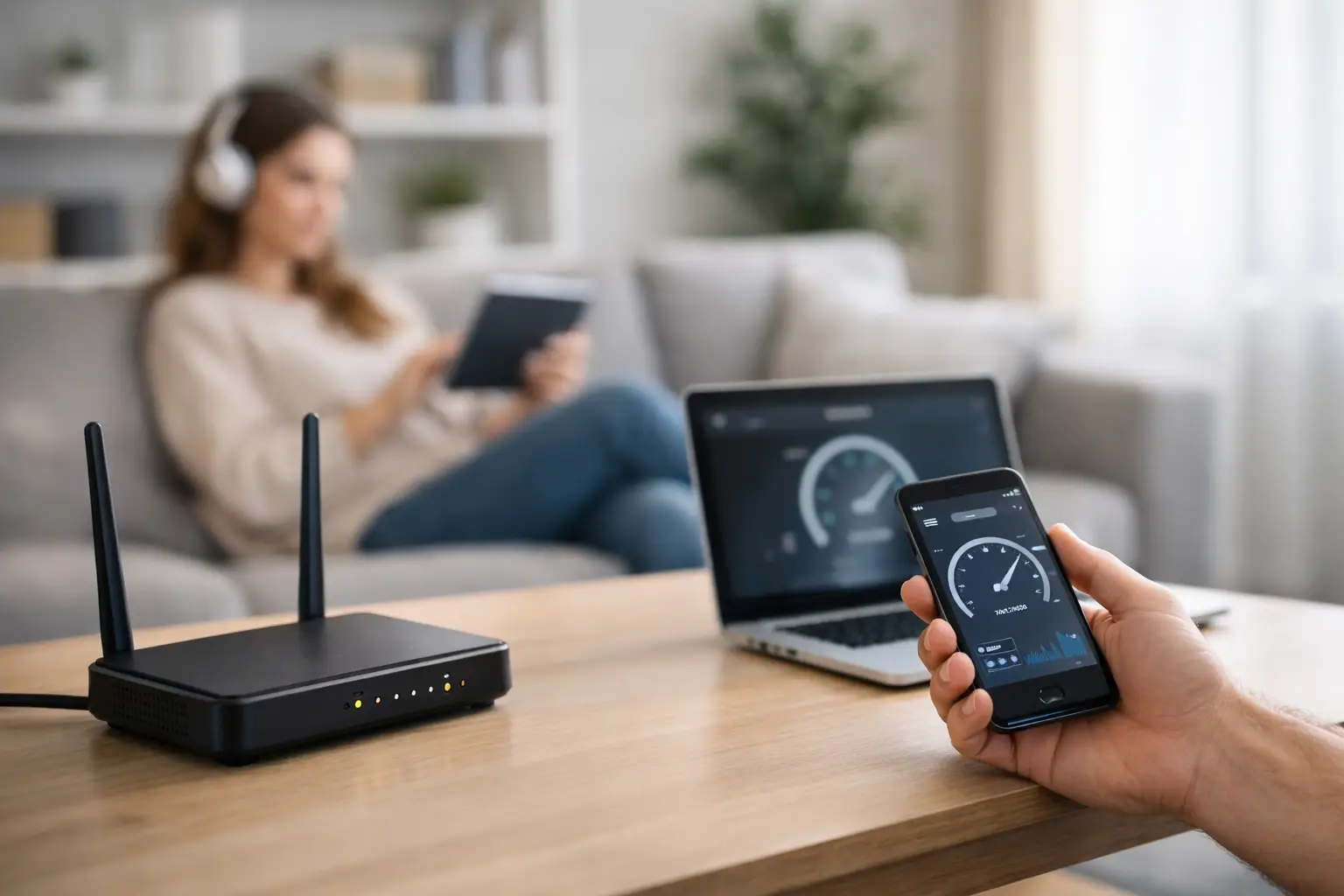
Someone in the house is on a Zoom call, another person is streaming Netflix in 4K, and a teenager is downloading a game update that looks bigger than your old hard drive. That is usually the moment people ask, what internet speed do I need? The honest answer is not one number for everyone. It depends on how many people are online, what they are doing, and whether you want your connection to feel just adequate or comfortably fast.
A lot of households pay for speed they never use. Just as many choose a plan that sounds fine on paper, then wonder why things slow down every evening. The right plan sits in the middle. You want enough speed for the way your home actually lives online, with room for busy nights, workdays, and surprise devices that quietly eat bandwidth in the background.
What internet speed do I need for everyday use?
If your home mostly covers the basics – browsing, email, social media, online shopping, and standard streaming – you usually do not need the fastest plan on the market. A single person or couple with light use can often get by with 100 Mbps, especially if only a few devices are active at once.
That changes quickly when more people are involved. A family home in Stratford, London, Listowel, or a nearby rural area may have smart TVs, phones, tablets, gaming consoles, doorbell cameras, and laptops all connected at the same time. Even when nobody feels like they are doing anything heavy, the total demand adds up. In that situation, 250 Mbps to 500 Mbps often feels far more comfortable.
For larger homes, heavy streamers, serious gamers, and remote workers sharing one connection all day, 1 Gbps can make sense. Not because every task needs gigabit speed, but because it gives your household more breathing room. Big downloads finish faster, multiple users can stay online without stepping on each other, and the connection feels more stable during peak hours.
Speed needs by activity
Internet plans are usually sold with download speed front and center, and that matters for most households. Download speed affects streaming, browsing, app installs, and how quickly large files arrive on your devices. Upload speed matters too, especially for video calls, cloud backups, security cameras, and sending large work files.
For casual browsing and email, the demand is low. Even a modest connection handles that easily. HD streaming usually works well with around 5 to 10 Mbps per stream, while 4K streaming often needs closer to 25 Mbps per stream. If you have three TVs streaming in high quality at the same time, suddenly your needs are no longer small.
Gaming is where people often get confused. Online gaming itself does not always require massive download speed. What matters just as much is latency, network stability, and whether other devices are crowding the connection. A gamer in a home with constant streaming and downloads may struggle on a plan that looks fast enough, simply because the network is busy. Then there are game downloads and updates, which can be enormous. Faster plans do not necessarily improve your in-game skill, but they do reduce the pain of waiting for updates.
Remote work and online learning bring upload speed into the picture. Video meetings, shared documents, virtual classrooms, and cloud platforms all depend on a connection that can send data reliably as well as receive it. If one person works from home full time, a lower-tier plan may still be fine. If two adults are on video calls while kids are streaming or gaming, moving up to a faster plan is usually worth it.
How many people are using your connection?
This is often the real question behind what internet speed do I need. One person living alone has very different needs than a family of five. A household with ten connected devices can feel easy to support. A household with thirty connected devices, several TVs, and smart home equipment can feel crowded on the same plan.
A good rule of thumb is to think in layers. First, consider how many people are online during your busiest hour. Second, think about the most demanding things happening at the same time. Third, leave some room for the devices you forget about – cloud backups, app updates, smart speakers, security systems, and background syncing.
If your busiest hour includes one person working from home, one person streaming, and general phone use, 100 to 250 Mbps may be enough. If your busiest hour includes multiple streams, gaming, video calls, and smart devices across the house, 500 Mbps starts to look like a smart fit. If your home is always busy and nobody wants to think about bandwidth anymore, 1 Gbps is often the easiest answer.
Don’t choose speed based on marketing alone
The fastest plan is not automatically the best value. Some households really do benefit from gigabit service. Others are paying for bragging rights and using only a fraction of what they buy. The better question is whether your current connection feels strained during normal use.
If everything works smoothly, your video calls are stable, your streaming does not buffer, and downloads finish in a reasonable time, you may not need to upgrade. If your connection slows down every evening, multiple users complain, or your workday gets interrupted by poor performance, that is a sign your plan may be too small or your home network needs attention.
It is also worth separating internet speed from Wi-Fi quality. Plenty of people upgrade their plan when the real issue is a weak router signal in the back bedroom or basement. If your speed tests look strong near the modem but weak farther away, the problem may be coverage inside the home, not the internet package itself.
A practical way to pick the right plan
Start with your household type, not a technical spec sheet. For a single user or couple with light streaming and regular browsing, 100 Mbps is often a sensible starting point. For small families, mixed device use, and occasional work-from-home needs, 250 Mbps gives you more flexibility. For busy family homes with multiple streams, gamers, students, and remote workers, 500 Mbps is a strong sweet spot.
Gigabit service makes the most sense for larger households, homes with heavy daily usage, or customers who simply want top-tier performance with fewer compromises. It is also a smart choice if you regularly download large files, run a home office, or want extra headroom for future devices and services.
Unlimited data matters too. Speed is only one part of a good internet plan. If your home streams a lot, uses cloud storage, downloads games, or supports remote work, data caps can become a headache fast. A plan with strong speeds and unlimited usage usually fits modern households much better than a faster plan with restrictive limits.
What internet speed do I need in a rural area?
Rural households often ask this question a little differently. The issue is not just speed, but availability and consistency. If you live outside a town center, your best option is the fastest reliable service available at your address, not the flashiest number in an ad.
A dependable 100 Mbps connection can serve many rural homes very well, especially if it comes with unlimited data and stable performance. If faster packages are available, the same logic still applies – match the plan to your real usage. A rural family with streaming, schoolwork, smart devices, and remote work may still benefit from 250 Mbps, 500 Mbps, or higher if those options are offered.
This is where a provider with local coverage knowledge matters. Availability can vary street by street and concession by concession. Straight answers about what is actually serviceable, plus help with setup and support, are often more valuable than generic promises.
When it’s time to move up
You do not need a technical audit to know when your current plan is falling short. If movies buffer during prime time, video calls freeze, gaming spikes when someone else starts streaming, or large downloads eat up your evening, your household has likely outgrown its current speed.
Moving up one tier often solves the problem without overcorrecting. Jumping from 100 Mbps to 250 Mbps or from 250 Mbps to 500 Mbps can make a noticeable difference in a busy home. For households that rely on internet for work, school, entertainment, and home security, the peace of mind is usually worth it.
S-Connect helps households across Southwestern Ontario choose internet that fits real life, whether that means a solid 100 Mbps plan for everyday use or gigabit service for a packed home with bigger demands. The best internet plan is not the one with the biggest number. It is the one that keeps up with your home without making you pay for speed you will never notice.
If you are still unsure, think about your busiest hour, not your quietest one. That is the clearest way to choose a plan that feels fast when it matters most.