
A dropped call during a work meeting, a dead cell phone during a power outage, or a missed call from a child can quickly show why your home phone setup matters. When comparing landline vs mobile plans, the right answer is rarely about choosing the newest technology. It is about choosing the service that gives your household dependable communication where and when you need it.
For many families, remote workers, students, and small businesses, a mobile plan handles nearly everything. For others, a home phone remains a practical, affordable backup that makes daily life easier. The best choice depends on coverage, calling habits, household needs, and whether you want one dependable number that stays at home.
Landline vs Mobile Plans: The Core Difference
A landline gives you a dedicated home phone number. Depending on the service available at your address, it may run through a traditional phone line, cable network, or internet-based phone connection. It is designed to stay in one place, making it a familiar option for household calling, home-based businesses, and family members who prefer a standard phone handset.
A mobile plan gives you calling, texting, and data through a cellular network. Your number travels with you, and your phone can support maps, messaging apps, video calls, work tools, and entertainment in one device. That flexibility is hard to beat, especially for people who spend much of the day away from home.
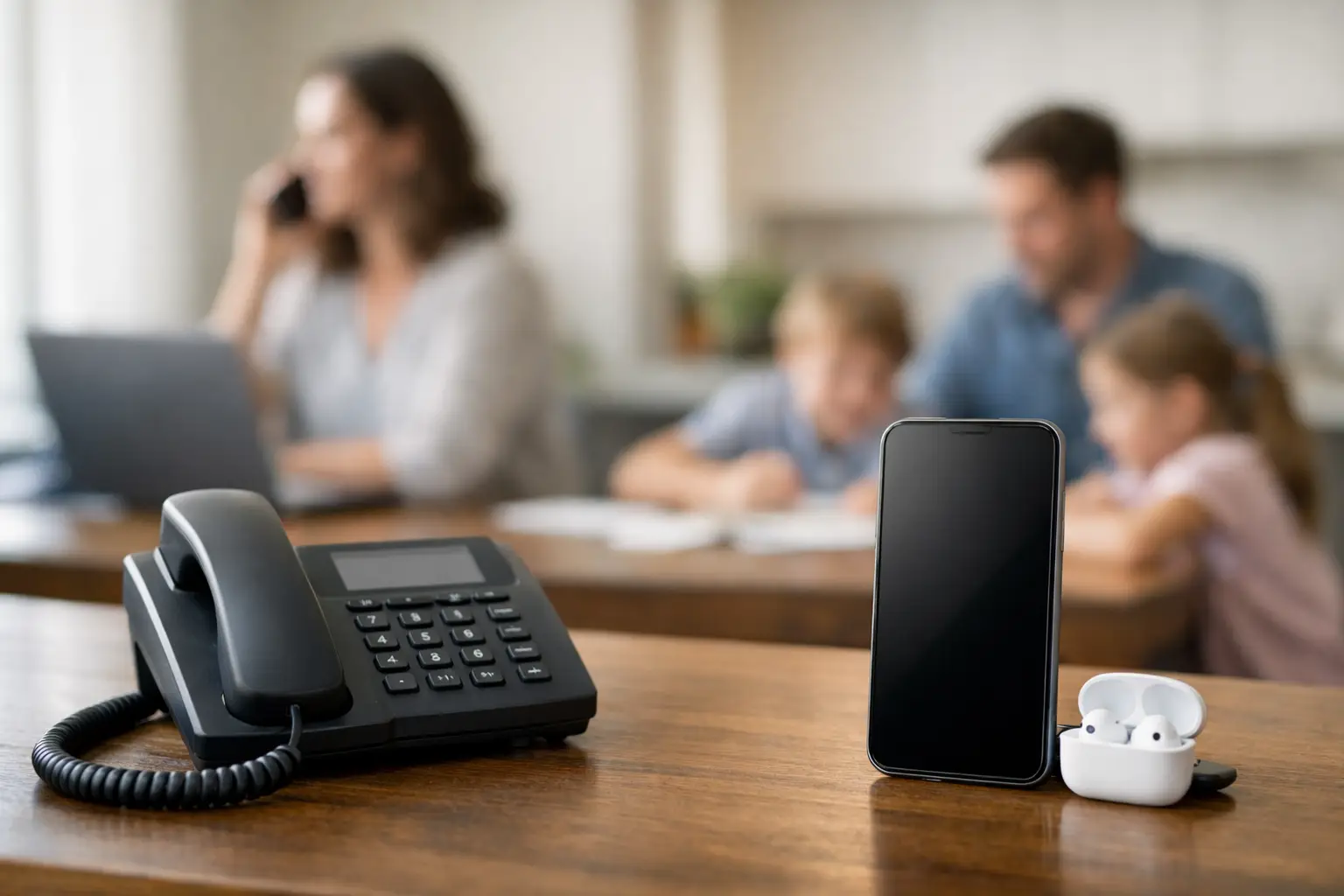
The trade-off is straightforward. Landlines prioritize a stable, fixed home connection. Mobile plans prioritize portability. Many homes benefit from both rather than treating them as competing services.
When a Landline Still Makes Sense
A landline is not outdated simply because smartphones are everywhere. It can solve several very current household problems.
You want a reliable number for the whole home
A shared household phone number means calls do not depend on one person’s battery level, location, or device settings. It is useful for families with young children, older relatives, roommates, or a caregiver who needs a consistent way to reach the home.
It also prevents important calls from being tied to a personal cell phone. Schools, doctors’ offices, service providers, and delivery contacts can use one number that anyone in the household can answer.
Cell coverage at home is inconsistent
Even strong regional cellular coverage can vary from one neighborhood, building, or rural property to the next. Metal roofing, thick walls, basements, trees, and distance from a tower can all weaken indoor service. If you regularly step outside to make a clear call, a home phone can be the simpler solution.
A landline service connected through a dependable home network may provide clearer, more consistent calling inside the house. Before deciding, test calls in the rooms where you actually work and spend time – not just by a window.
You run a small business from home
Using a personal mobile number for business calls can blur the line between work and home. A dedicated landline number helps customers reach your business, allows calls to be answered by another family member or team member when needed, and creates a more established point of contact.
For a home office, the strongest setup may be a business-friendly home phone paired with fast internet. Clear voice service matters when you are booking appointments, supporting customers, or taking orders.
You need an easier calling experience
Not everyone wants to navigate a touchscreen, manage charging cables, or sort through app notifications. A traditional handset with large buttons, adjustable volume, and a clear ringer can be much easier for seniors and people who want a straightforward way to call for help.
When Mobile Plans Are the Better Fit
A mobile plan is often the better primary choice for households that need flexibility more than a fixed home number.
Your household is rarely all in one place
If family members commute, travel, attend school, or manage busy schedules, mobile service keeps everyone reachable. Calls, texts, location tools, and data remain available wherever coverage is available. This is especially valuable for parents coordinating pickups, workers traveling between job sites, and students moving between campus, home, and activities.
You need data, not just calling
A landline is built for voice calls. A mobile plan can be a communications hub for messaging, email, navigation, banking alerts, video chats, and hotspot access. For someone who needs to respond quickly while away from home, mobile service delivers far more than a dial tone.
That said, a mobile plan should not be viewed as a replacement for dependable home internet. Streaming, online learning, gaming, remote work, and multi-device households can use data quickly. A high-speed home internet plan with unlimited usage gives your mobile devices a better place to connect when you are home.
You prefer one device and one bill
For a single person or couple with good cellular coverage, a mobile-only setup can be cost-effective and simple. There is no extra home phone equipment, no second number to manage, and no reason to pay for a service that rarely gets used.
This approach works best when your phones are kept charged, your home has reliable signal, and everyone who needs to reach you already has your mobile number.
The Reliability Questions to Ask Before Choosing
Price matters, but the lowest monthly cost is not always the best value. Ask what happens when circumstances are less than perfect.
First, consider power outages. Traditional copper landlines may continue working during some outages, but many modern home phone services rely on cable or internet equipment that needs power. If you choose an internet-based landline, ask about battery backup options and keep a charged mobile phone available for emergencies.
Next, look at cellular reliability around your home and on the roads you travel most. A mobile plan can be excellent in town but less dependable in certain rural locations, valleys, or inside older buildings. Coverage maps are useful, but real-world testing is better.
Finally, think about call quality when your internet is busy. If your home phone operates over your internet connection, a strong broadband plan can help support clear calls while other people stream, game, study, or work. This is where dependable high-speed service and responsive local support make a meaningful difference.
Compare the Total Cost, Not Just the Monthly Price
A landline may have a low monthly rate, but look for equipment fees, installation costs, long-distance charges, and optional calling features. Mobile plans can look affordable until taxes, device payments, data limits, overages, and multiple lines are added.
For families, bundling can simplify the decision. Combining home internet, phone, mobile, TV, or security services may reduce the number of bills to manage and provide better overall value than choosing every service separately. The right bundle should fit how you actually use technology, not push you into paying for features you will never use.
If your household makes mostly local calls, works from home, and has mixed mobile coverage, a landline plus modest mobile plans may be the smart balance. If everyone is mobile, uses data heavily, and has excellent coverage at home, mobile-first service with strong home internet may make more sense.
A Practical Setup for Most Connected Homes
For many households, the strongest answer is not landline or mobile. It is assigning each service a clear role.
Use mobile plans for life on the go: texting, navigation, work updates, school coordination, and personal calls. Use high-speed home internet for streaming, video meetings, online learning, and connected devices. Add a landline when you want a shared household number, easier access for family members, more dependable indoor calling, or a dedicated line for a home business.
This approach also gives your household options. If one service has an issue, you are not left without a way to communicate. That extra flexibility can matter far more than a small difference in monthly price.
Choose Based on Your Address and Your Routine
The best communication plan starts with a simple look at your daily routine. Count how many people need a phone, where they spend their time, how dependable cell service is at home, and whether a shared number would make life easier. Then compare plan details based on actual coverage and usage, not assumptions.
S-Connect helps households and small businesses find practical combinations of internet, home phone, and mobile services backed by local support. A quick availability check can help you choose a setup that fits your address, your budget, and the way your household stays connected.
The goal is not to own more technology. It is to make sure the next important call reaches you clearly, whether you are at home, at work, or on the road.