
The old cable bill is rarely just one number. It is a stack of channel packages, equipment fees, and services your household may not even use. Cord cutting service options give you more control, but the best choice is not simply the cheapest app. It is the mix of live TV, on-demand streaming, local channels, sports access, and reliable internet that works for the way your home actually watches.
For a family with multiple TVs, a remote worker on video calls, and kids streaming after school, the internet connection matters as much as the entertainment subscription. Before canceling traditional TV, look at what you watch most and how many people use your connection at the same time.
Start With What You Would Miss From Cable
Most households do not need every channel in a large cable package. They do need a few things they would notice immediately if they disappeared. Local news, live sports, major network shows, specialty channels, and easy access for family members are usually the deciding factors.
Write down the channels and programs your household watches in a normal month. Be specific. If someone watches one particular sports league, a morning news station, a children’s channel, or a specialty program, check where it is available before making a switch. A service that looks inexpensive can become costly if you need several add-ons to replace the content you already enjoy.
Also consider convenience. Some viewers are happy opening several apps. Others want a familiar channel guide, live programming, and a remote that works the same way every night. There is no wrong answer. The right setup is the one your household will actually use.
The Main Cord Cutting Service Options
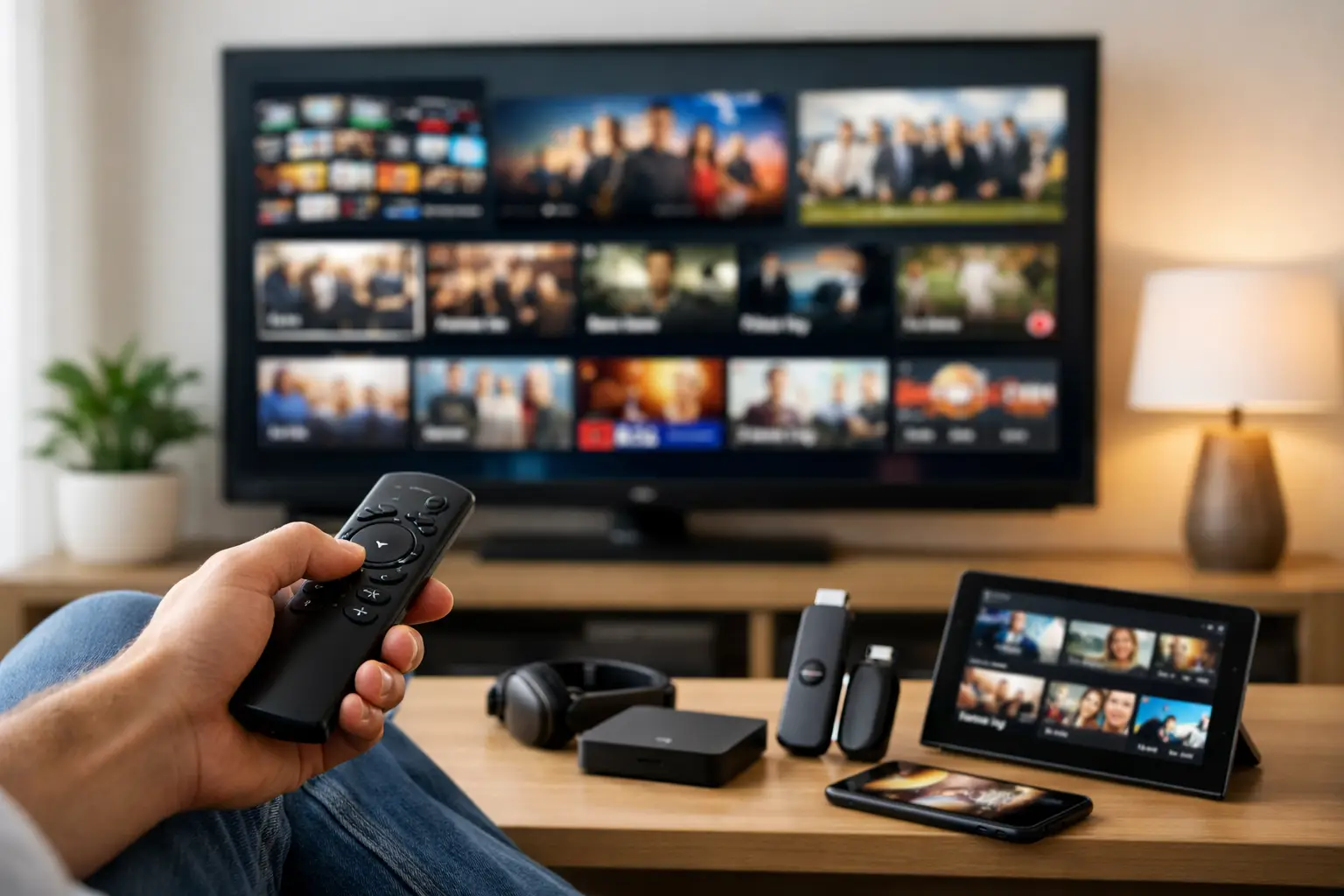
Cord cutting does not mean one single type of TV service. It usually means choosing between on-demand streaming, live TV streaming, an antenna, or a combination of all three.
On-demand streaming services
On-demand services are built for watching shows, movies, documentaries, and original programming when you want. They are often the simplest place to start because plans can be changed or canceled more easily than a traditional TV contract.
These services work well for households that mostly watch series, movies, and children’s programming. They are less complete for viewers who want local news or live sports every day. Many families use two or three on-demand services and rotate subscriptions throughout the year based on what they want to watch.
The trade-off is content overlap. One show may be on one service while another favorite is somewhere else. Set a monthly entertainment budget before adding subscriptions one by one.
Live TV streaming services
Live TV streaming delivers a cable-style channel lineup through an internet connection. Depending on the provider and your location, plans can include news, entertainment, sports, lifestyle, and local network channels. Most also include cloud DVR features, so you can record programs without a physical box.
This is often the closest replacement for traditional cable TV. It is a strong fit for households that want live events, sports, news, and a familiar channel guide without committing to a large cable bundle.
The main consideration is price. Live TV streaming plans tend to cost more than on-demand services, especially once premium channels or sports packages are added. Channel availability can also vary by address, so always verify your local lineup before subscribing.
Free and ad-supported streaming
Free streaming platforms offer movies, older TV series, live channels, and niche programming without a monthly subscription. They can be useful for casual viewing, especially in a second room, student apartment, or home where people do not need a specific channel lineup.
The trade-off is advertising and less control over what is available. Think of these services as a supplement, not a full replacement for live sports, current network shows, or must-watch specialty channels.
Antennas for local channels
A modern indoor or outdoor antenna can provide local broadcast stations in areas with good signal coverage. This can be an affordable way to watch major network programming, local news, and some live events without a monthly TV fee.
Reception depends heavily on your address, terrain, building materials, and antenna placement. Rural homes may need a stronger outdoor antenna or may have fewer stations available than homes closer to a broadcast center. Check expected reception for your specific location before buying equipment.
Internet-based TV from your provider
For households that want fewer moving parts, provider-based IPTV can be a practical middle ground. It brings TV programming through your internet connection while keeping service, installation, and support in one place. This can be especially helpful when you want a traditional TV experience but prefer the flexibility of modern digital service.
S-Connect offers internet and digital service options designed for homes that need dependable connectivity and straightforward local support, including households in communities where service choices may be more limited.
Choose Internet for the Whole House, Not One TV
Streaming quality is only as good as the connection behind it. A single high-definition stream does not require the same capacity as a busy home with multiple TVs, phones, laptops, gaming consoles, smart speakers, and security devices all online.
For a light-use household, a reliable plan around 100 Mbps may be enough for everyday browsing, video calls, and a few streams. Families with several active users often benefit from faster service, particularly when someone works from home or games online while others stream. Gig-speed plans can make sense for larger households, content creators, and homes that regularly run many high-demand devices at once.
Speed is not the only factor. Unlimited data matters when your household streams daily, downloads games, attends video meetings, or uses cloud backups. A plan with a low data cap can turn a lower monthly price into an unexpected bill. Reliable performance, strong in-home Wi-Fi, and responsive support are just as valuable as a headline speed number.
Do Not Overlook Your Home Wi-Fi Setup
A fast internet plan cannot fix weak Wi-Fi in a basement office or bedroom at the far end of the house. If video buffers in one room but works well near the router, the issue may be placement, interference, or coverage rather than your service speed.
Place your router in a central, open area whenever possible. Avoid tucking it inside a cabinet or behind a TV. Larger homes, older construction, and rural properties with outbuildings may benefit from mesh Wi-Fi equipment that extends coverage more consistently across the property.
If you plan to stream live sports or game online, use a wired connection where practical. Connecting a TV, gaming console, or work computer directly to the router can reduce interruptions and free up Wi-Fi for mobile devices.
Watch for These Costs Before You Switch
Cord cutting can lower your monthly bill, but only when you add services with intention. A household that signs up for several premium apps, live TV, sports add-ons, extra cloud storage, and upgraded equipment can spend as much as a large TV package.
Before you commit, check for monthly plan increases after promotional periods, equipment or device costs, limits on simultaneous streams, advertising tiers, and cancellation terms. Sports fans should also confirm whether their preferred games are subject to local blackouts or require a separate league package.
It is smart to keep your current TV service for a short overlap period if possible. Test your new setup during a normal week. Watch live news, stream a busy evening program, run a video call, and see whether everyone in the household can access what they need. That small test can prevent a frustrating surprise after cancellation.
Build a Setup Around Your Real Viewing Habits
The best cord cutting service options are usually simple. A household that watches mostly movies and series may only need one or two on-demand subscriptions. A sports-focused family may need live TV streaming plus a specific sports add-on. A budget-conscious home may combine an antenna, one paid streaming service, and free ad-supported channels.
Avoid paying for channels you never watch just because a package sounds comprehensive. Start with the essentials, use them for a month, and add only what your household truly misses. Your TV setup should make evenings easier, not create another bill full of clutter.
A better entertainment plan starts with a dependable connection, clear viewing priorities, and service choices that fit your home today. When your internet can keep up with every screen, cord cutting becomes less about giving something up and more about choosing what works.