
A house with three streamers, two students, and one remote worker will expose a weak internet connection fast. That is why the cable vs wireless internet question matters more than most people think. On paper, both can get you online. In real life, the better option depends on where you live, how many people share the connection, and how much frustration you are willing to tolerate when the network gets busy.
For many homes and small businesses, the choice comes down to consistency versus flexibility. Cable internet has long been the go-to option in towns and cities because it offers strong speeds and stable performance for everyday use. Wireless internet can be a lifeline in rural areas or places where wired service is limited, and in the right setup it can work very well. The smart move is to compare them based on how you actually use the internet, not just the advertised speed.
Cable vs wireless internet: the core difference
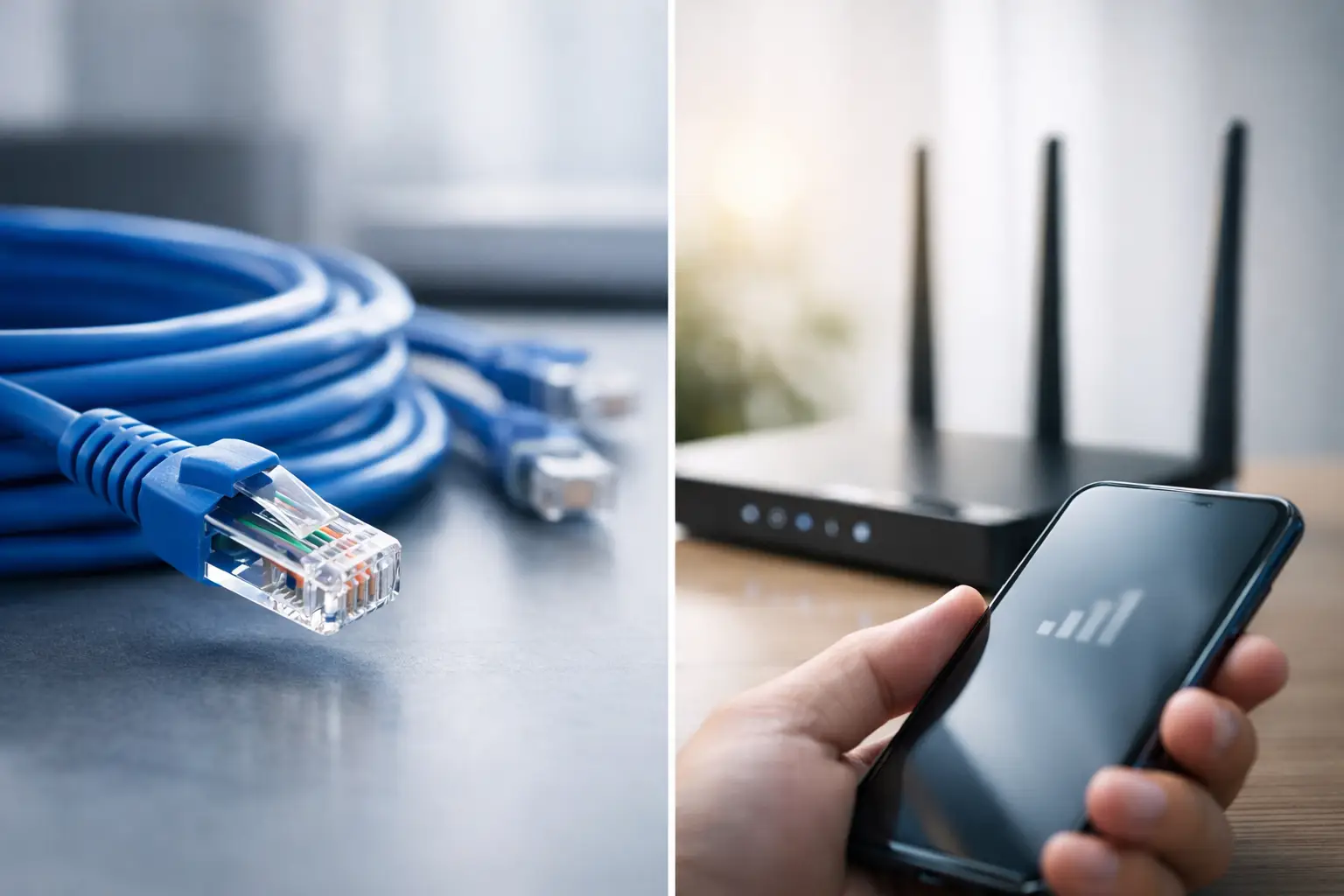
Cable internet reaches your home through a physical coaxial cable line. It is a wired connection to the network, which usually means steadier speeds and less sensitivity to outside conditions. If your neighborhood already has cable infrastructure, installation is often straightforward and the performance is usually predictable.
Wireless internet delivers service without that direct cable line into the home in the same way. It may use fixed wireless equipment or cellular-based technology to connect your location to a nearby tower or access point. That makes wireless especially useful in underserved areas where cable or fiber is not available.
This is the first big difference to understand. Cable is tied to existing lines. Wireless is tied more closely to signal strength, line of sight in some cases, and network conditions in the surrounding area.
Where cable internet usually wins
If your household is heavy on streaming, gaming, video calls, and connected devices, cable often has the advantage. It is built for high-capacity use and generally handles multiple users better than many wireless setups. That matters when everyone is online at once and nobody wants buffering during a movie or lag in the middle of a game.
Cable also tends to offer faster download speeds across a wider range of plans. For families choosing between 100 Mbps, 300 Mbps, or gigabit-level service, cable gives room to grow without changing the basic connection type. For most households, that translates into smoother 4K streaming, faster large file downloads, and fewer complaints from the back bedroom.
Reliability is another strength. Because the connection is physical, it is usually less affected by weather, interference, or changes in signal quality. It is not perfect – neighborhood congestion can still happen during peak hours – but cable remains a strong choice for customers who need dependable daily performance.
Where wireless internet makes sense
Wireless internet shines when wired options are limited, expensive to install, or simply unavailable. In rural communities, outskirts of town, and harder-to-reach properties, wireless can be the fastest realistic way to get connected. That alone makes it a valuable option for many households in Southwestern Ontario and similar regions.
It also offers flexibility. Installation can sometimes be quicker than extending a wired line, and for customers who need service in areas with fewer infrastructure options, wireless may be the practical answer. If your current alternative is slow DSL or no service at all, a solid wireless connection can feel like a major upgrade.
Wireless can work well for everyday browsing, email, streaming, schoolwork, and even remote work, provided the signal is strong and the plan is matched to the household. The key phrase is provided the setup is right. Wireless performance depends more heavily on location, tower load, equipment placement, and environmental factors than cable does.
Speed is only part of the story
Many people shop for internet by looking at the biggest Mbps number they can find. That is understandable, but it is not the full picture. A connection that advertises fast speeds but fluctuates heavily can feel worse than a slightly slower connection that stays consistent all day.
With cable, speed tends to be more stable for most users, especially in areas with established infrastructure. With wireless, speed can vary more depending on signal quality and usage patterns in your area. That does not make wireless bad. It means expectations should be realistic.
Upload speed matters too, especially for remote workers, students, content creators, and anyone on frequent video calls. Cable plans can perform well here, though exact upload speeds vary by provider and network. Wireless upload performance can be perfectly usable, but it may be more sensitive to local conditions. If you send large files, use cloud backups, or run a home business, this is worth asking about before you order.
Reliability in real-world use
Reliability is where the cable vs wireless internet decision often becomes clear. If your job depends on stable Zoom calls, your kids need uninterrupted access for school, or your point-of-sale system has to stay online, consistency matters more than marketing language.
Cable usually delivers fewer day-to-day surprises. It is less vulnerable to weather shifts, signal obstruction, and wireless interference. For households that want a connection they can mostly forget about, that can be a major advantage.
Wireless has improved a lot, and in a well-served area it can be very dependable. But it is still more exposed to variables outside the home. Trees, terrain, tower congestion, and severe weather can all affect performance depending on the technology used. Some customers will gladly accept that trade-off because wireless gives them access where wired service does not.
Cost, value, and what you are really paying for
Price matters, but value matters more. The cheapest monthly bill is not always the best deal if the connection struggles under normal use. A lower-cost plan that cannot handle streaming, work, and gaming at the same time may end up costing you patience every single day.
Cable internet often delivers stronger value for high-use households because it supports more devices and heavier usage with fewer compromises. If you are paying for unlimited data and higher speed tiers, you want a connection that can actually make use of them.
Wireless pricing can be attractive in areas with limited alternatives, and for moderate-use households it may be entirely sufficient. The real question is whether the service level matches your home. A retired couple checking email and streaming a little at night has very different needs than a family of five with smart TVs, tablets, cameras, and gaming consoles.
It is also smart to look at installation support, equipment quality, and customer service. Local help has real value when you need setup assistance or want clear answers about availability. That is one reason many customers prefer a provider that understands regional coverage instead of treating every address the same.
Cable vs wireless internet for different households
For apartment living, family homes in town, and small businesses with regular daily traffic, cable is often the safer pick. It is especially strong for heavy streaming, gaming, work-from-home setups, and homes with lots of connected devices.
For rural homes, edge-of-town properties, farms, and locations where cable access is weak or unavailable, wireless may be the better path simply because it gets modern internet to places traditional wired service has not fully reached. In many of those cases, a strong wireless plan is far better than waiting indefinitely for another option.
If you are between the two, think about your busiest hour. Not your quietest. If everyone is online at 7:30 p.m., which service is more likely to hold up? That answer usually points you in the right direction.
How to choose the right option
Start with availability. The best internet service is the one that is actually serviceable at your address and can meet your day-to-day needs. After that, look at speed tiers, unlimited data, reliability expectations, and how many people use the connection at once.
Ask simple, practical questions. Is this for basic browsing or a full connected household? Do you need stable video calls every day? Are you in town, on a rural road, or somewhere in between? Do you want to bundle internet with TV, phone, mobile, or other services for added convenience?
For many customers, cable will be the top choice when available because it balances speed, reliability, and overall value. For others, wireless is the smarter and more accessible solution, especially in rural areas where dependable service can be harder to find. Providers like S-Connect can help customers compare what is available locally and match the right plan to the way they actually live and work.
The best internet choice is not the one with the flashiest promise. It is the one that keeps up with your home on its busiest day and makes online life feel easy.