

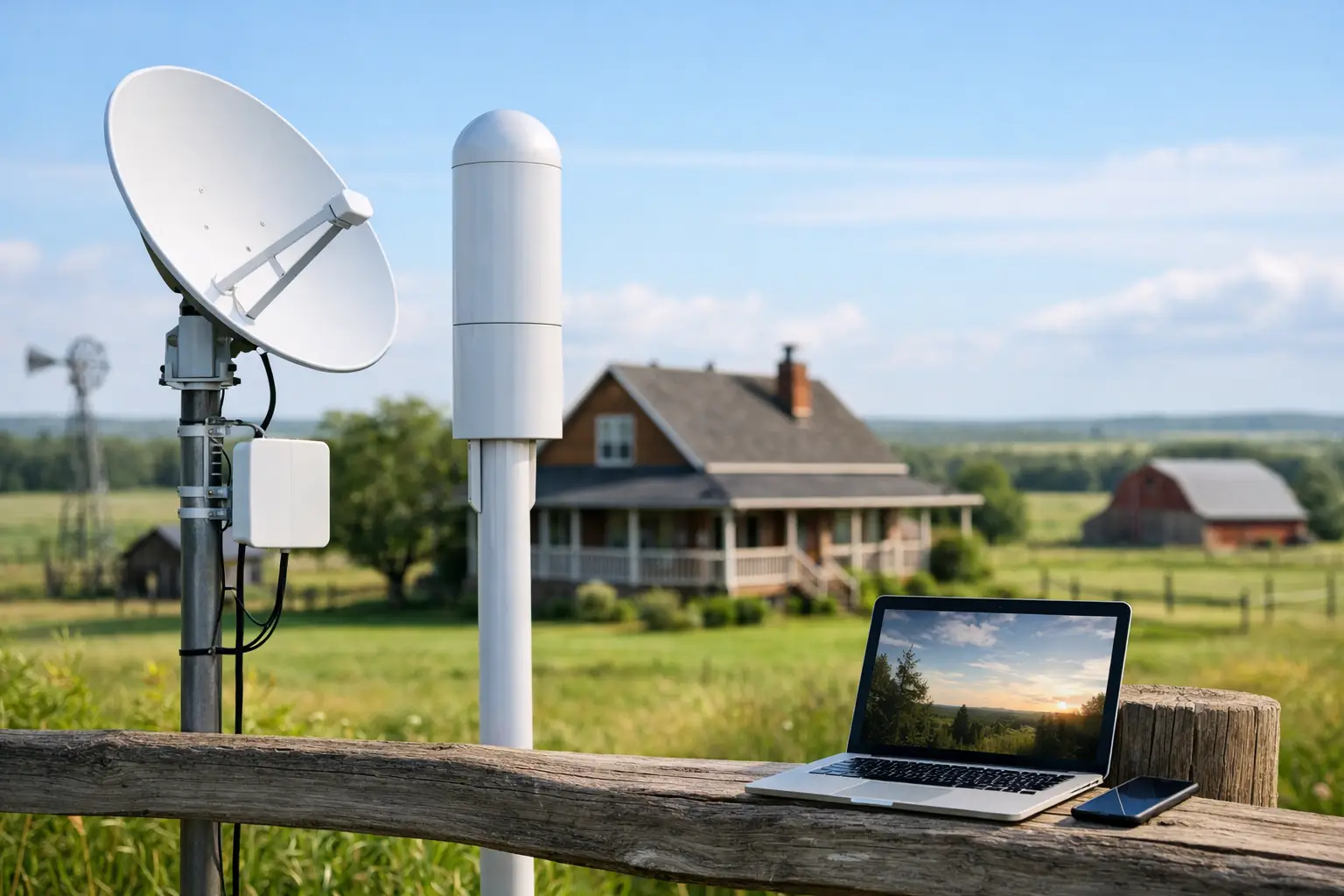
A rural internet provider review should start with the moment your connection matters most: a video call freezes during the workday, your child cannot upload an assignment, or every screen in the house slows down when the evening streaming starts. Rural households do not need vague promises. They need service that fits the way they actually live, work, learn, and relax.
The right provider is not always the one with the biggest advertised speed number. Availability at your exact address, network type, data limits, equipment, installation, and local support all affect your day-to-day experience. For homes and small businesses across Southwestern Ontario, comparing those details can mean the difference between internet that simply turns on and internet you can depend on.
What to Look for in a Rural Internet Provider Review
Start with coverage, not a package name. Rural service can change from one road to the next, and a plan available in town may not be available a few miles outside it. Ask for an address-specific service check and confirm the connection type offered at your property before making a decision.
Next, look at the speed in context. A household that checks email, scrolls social media, and streams on one TV has different needs than a home with two remote workers, online classes, cloud backups, smart devices, and serious gamers. Faster plans provide more room for several people to be online at once, but the best fit is the plan that handles your household’s busiest hours without forcing you to overpay for capacity you will not use.
Unlimited data is another major consideration. Streaming in high definition, downloading games, video conferencing, and security cameras can use more data than many customers expect. A lower monthly rate can lose its appeal quickly if it comes with restrictive limits, overage charges, or reduced speeds after a certain usage level. Clear unlimited-data options give active households more confidence month after month.
Finally, pay attention to the support experience. When your connection needs attention, you want clear answers, practical troubleshooting, and help from people who understand the communities they serve. Localized service and installation support can be especially valuable in rural areas, where generic advice does not always match the realities of a property, road, or existing line.
Compare the Connection Type, Not Just the Download Speed
Internet technologies are not interchangeable. The service available to your address shapes consistency, latency, upload performance, and how well the connection holds up when multiple people are online.
Cable internet is often a strong option where established cable infrastructure reaches rural communities and nearby towns. It can offer fast download speeds that work well for streaming, gaming, schoolwork, and busy family use. Performance may vary by local network conditions, but a well-served cable address can support demanding everyday use very effectively.
Fiber is generally the benchmark for high capacity and fast uploads, particularly useful for remote workers transferring large files, businesses using cloud systems, and homes with many connected devices. Full fiber coverage is still limited in many rural locations, so it is worth checking what is available rather than assuming a fiber plan can be installed at your property.
Fixed wireless can help bring service to areas beyond traditional wired networks. Its performance depends on factors such as signal path, terrain, weather conditions, equipment placement, and tower capacity. It may be the practical answer for a remote address, but it deserves a direct conversation about expected speeds and installation requirements.
Satellite reaches places other technologies may not, making it a valuable option for very remote properties. The trade-off can be higher latency, which may affect real-time gaming, video calls, and certain business applications. It can still serve basic browsing, email, and streaming needs when better-grounded options are unavailable.
A good provider should explain the connection being offered plainly. If the answer is unclear, ask whether the service is wired, wireless, or satellite-based, what equipment is required, and what performance you should reasonably expect at your address.
Download Speed Helps, but Upload Speed Matters Too
Download speed gets the headlines because it affects streaming and downloads. Upload speed is just as meaningful for households that work from home, attend virtual appointments, share large files, use online backup, or run security cameras.
If a remote worker is sending presentations while another person joins a video meeting, weak upload capacity can become the bottleneck even when download speed appears generous. Ask about both figures, especially if your home office or small business relies on cloud-based tools.
Latency also matters. It is the delay between your device and the network. Lower latency usually creates a more responsive experience for video calls, online gaming, voice services, and remote access tools. There is no single perfect number for every customer, but it is a worthwhile question when interactive use is part of your routine.
Check the Full Monthly Cost Before You Order
Price matters, but an honest comparison goes beyond the promotional rate. Confirm the regular monthly price, equipment rental or purchase costs, installation charges, taxes, and any optional add-ons. A provider that presents pricing clearly makes it easier to choose confidently.
Also ask whether there is a contract term and what happens if you move. Rural households can face more limited choices than urban customers, so flexibility may carry real value. For renters, seasonal properties, or families planning a move, knowing the transfer and cancellation process in advance prevents surprises later.
Bundles can make sense when they simplify services you already use. Internet combined with TV, home phone, mobile, or security may reduce the number of bills you manage and provide better overall value. Still, choose a bundle because it fits your needs, not because it includes services that will sit unused.
Installation Can Make or Break the First Week
Rural installations are not always plug-and-play. The technician may need to assess existing lines, determine the best equipment location, or identify signal and access considerations around the property. A clear installation process sets realistic expectations before service day.
Ask whether professional installation is required, whether someone needs to be home, and whether there are property-specific conditions that could affect timing. For wireless service, equipment placement can be particularly important. For wired service, the condition and location of existing infrastructure may affect the setup.
After installation, test the connection where you actually use it. Check video calls from the home office, streaming in the living room, gaming in the bedroom, and Wi-Fi performance on the patio or in a detached workspace if those areas matter to you. Internet service and in-home Wi-Fi are connected but not identical. Sometimes the plan is sufficient while router placement or home layout needs attention.
Questions Worth Asking Before Choosing Service
A straightforward conversation with a provider should answer the practical questions that affect your experience. Ask what service is available at your exact address, what typical use the recommended plan supports, whether data is unlimited, and what equipment is included. Confirm upload speed, installation timing, monthly costs after promotions, and the process for getting help if something changes.
For small business owners, add questions about the number of users and devices the connection can support, whether a dedicated business option is available, and how downtime concerns are handled. A home-based business may have needs that exceed a typical household, especially when point-of-sale systems, cloud storage, customer calls, and security tools are all active at once.
S-Connect serves communities across Southwestern Ontario with internet options designed for real households and local businesses, including unlimited-data plans where available and support for customers who want straightforward answers. That local focus matters when service needs to work beyond the city limits.
The Best Rural Internet Choice Is Address-Specific
There is no universal winner for every rural property. A family near Stratford, Listowel, London, or Mitchell may have access to a very different set of services than a household farther down the road. The best choice depends on what can be installed, how many people use the connection, and which activities cannot afford interruptions.
Do not settle for a comparison based only on advertised maximum speeds. Look for clear coverage information, realistic performance expectations, unlimited usage when your household needs it, transparent pricing, and accessible support. Those are the details that continue to matter long after installation day.
A dependable connection should make daily life easier, whether that means a calm work call, a smooth movie night, an online class that stays connected, or a small business that can keep serving customers. Start with your address, describe how your household uses the internet, and choose the service built to keep up.