
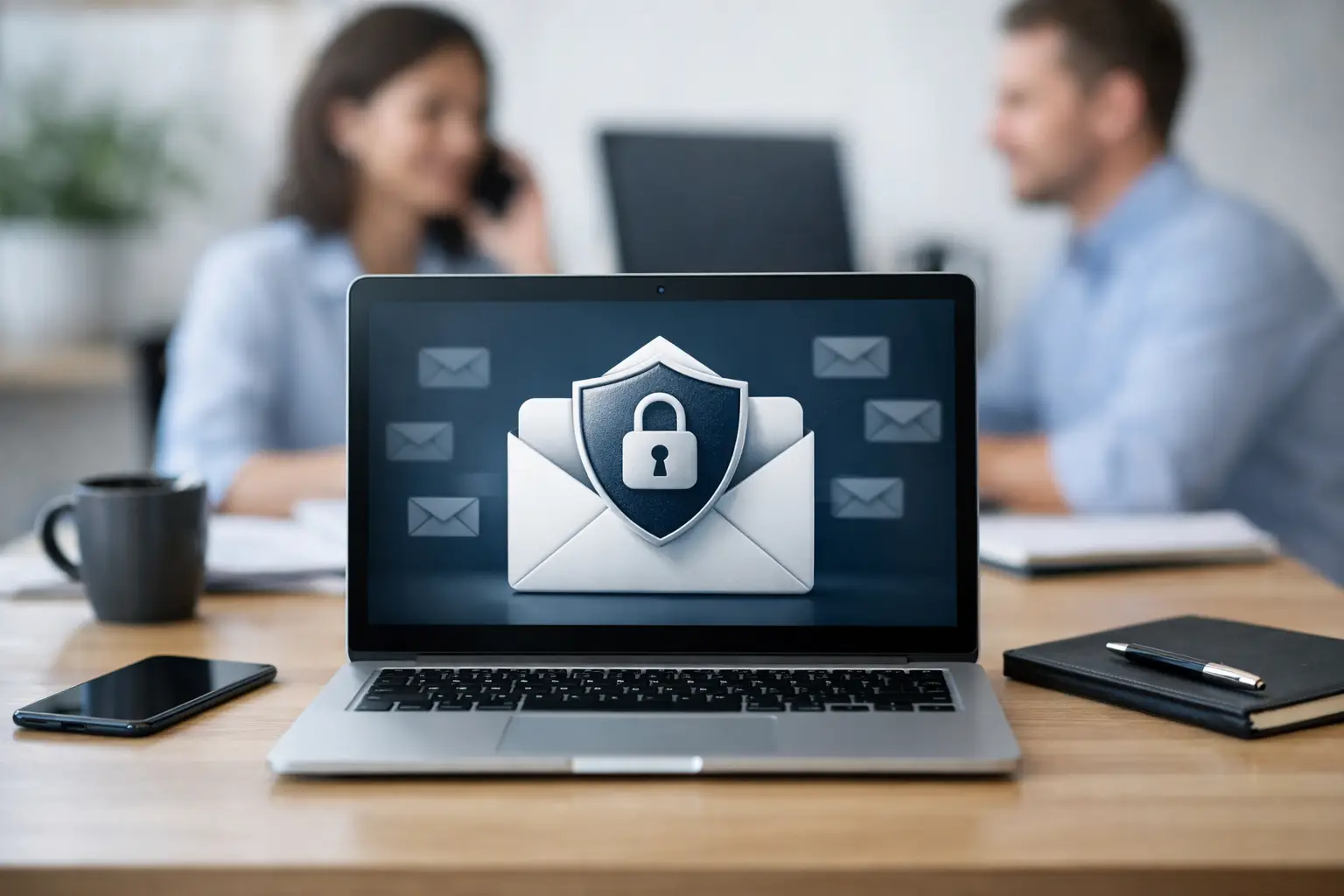
A fake invoice does not need to look suspicious to cause damage. It may arrive with a familiar vendor name, a realistic payment request, and one link that sends a staff member to a convincing login page. For a local shop, contractor, clinic, or growing office, secure email for small business is not just an IT upgrade. It is a practical way to protect payments, customer information, and the reputation you have worked hard to build.
Small businesses are often targeted because attackers expect fewer formal controls and busy employees who need to move quickly. The answer is not making email difficult to use. It is choosing the right protections, setting clear habits, and working with a provider that can offer straightforward support when something does not look right.
Why Secure Email for Small Business Is Worth the Investment
Email carries far more than everyday messages. It carries estimates, contracts, payroll details, password resets, supplier conversations, tax documents, and customer records. One compromised mailbox can give a criminal a clear view of how your business operates and who needs to be contacted next.
The most common risk is business email compromise. This happens when someone gains access to an employee account or impersonates a trusted contact. They may ask for a bank-detail change, redirect a payment, or request gift cards or sensitive files. The message often looks normal because it uses information from a real conversation.
There is also the cost of downtime. If your account is locked, your domain is flagged for spam, or your team cannot access critical messages, business can slow down immediately. Calls get missed, jobs are delayed, and customers may question whether their information is safe.
Secure email should reduce those risks without forcing a small team to become security experts. The best setup combines dependable email hosting with protections that work quietly in the background and a few simple rules your staff can follow every day.
Start With a Business Domain, Not a Free Inbox
A business address such as name@yourcompany.com looks more professional than a free consumer inbox. More importantly, it gives your business greater control. You can create and remove employee accounts, keep communication under your own domain, and prevent a former employee from taking customer contacts with them.
A domain-based email system also supports technical safeguards that help receiving mail servers confirm your messages are legitimate. These settings reduce the chance that criminals can impersonate your business and make it more likely that your genuine emails reach customer inboxes.
Free email can be suitable for personal use, but it is rarely the best long-term foundation for a company. When you rely on a business domain and managed email hosting, you have a clearer path for account management, support, backups, and growth.
For businesses that want internet, domains, hosting, and communication services handled in one place, S-Connect can help simplify the setup. The right package depends on your team size, existing domain, and how much hands-on support you need.
The Features That Matter Most
Security claims can sound technical, but the features worth prioritizing are easy to understand. Look for multi-factor authentication, spam and phishing filtering, encrypted connections, account controls, and reliable backup options.
Multi-factor authentication stops many account takeovers
A password alone is no longer enough. Multi-factor authentication, often called MFA, asks for a second proof of identity after the password. This may be a code from an authenticator app, a security key, or an approval notification on a phone.
If a password is stolen through a phishing page or exposed in an unrelated data breach, MFA can prevent the thief from signing in. It is one of the highest-value steps a small business can take, especially for owners, finance staff, and anyone with access to customer data.
Avoid relying only on text-message codes when a stronger app-based method is available. Text messages are better than no second factor, but phone numbers can be hijacked. An authenticator app is generally a stronger choice for most teams.
Spam filtering must do more than block junk
Good email filtering identifies suspicious attachments, malicious links, impersonation attempts, and unwanted bulk messages before they reach the inbox. It should also allow your team to review quarantined messages, because aggressive filtering can occasionally catch a legitimate quote or customer request.
No filter catches every threat. A message from a compromised supplier account may pass basic checks because it comes from a real address. That is why filtering must be paired with staff awareness and payment verification procedures.
Encryption protects messages in transit, but has limits
Most reputable business email services use encryption while messages travel between your device and the email server. This helps prevent casual interception on public Wi-Fi or other networks. It is a baseline feature, not a complete privacy guarantee.
Regular business email is not always end-to-end encrypted. Depending on the recipient’s provider and configuration, message content may be accessible on mail servers. If you regularly send highly sensitive materials such as medical records, legal documents, banking information, or government identification, ask about secure portals, encrypted file sharing, or specialized encryption tools. Email may not be the right channel for every document.
Backups and recovery protect against human error
Security is not only about outside attackers. Employees delete messages, mailboxes get misconfigured, and ransomware can affect files linked in email. Ask how long deleted messages can be recovered, who can restore an account, and what happens if an employee leaves.
A clear recovery process saves time when a real issue happens. Your business should know who has administrator access, where recovery codes are stored, and who to call for support.
Set Up Email Authentication for Your Domain
Three domain settings are particularly valuable: SPF, DKIM, and DMARC. Their names are technical, but their purpose is simple. They help receiving systems verify that email claiming to come from your domain was actually authorized by your business.
SPF identifies the servers allowed to send mail for your domain. DKIM adds a digital signature to outgoing messages. DMARC tells receiving providers what to do when a message fails those checks and provides reporting that can reveal impersonation attempts.
These settings do not make every message safe, and they require careful configuration. A mistake can affect delivery from your website forms, marketing platform, billing software, or other services that send email in your name. For that reason, make a complete list of approved senders before enforcing a strict DMARC policy. A knowledgeable hosting or email provider can help configure and monitor these records.
Make Safer Email a Daily Habit
Technology helps most when staff know what to watch for. Keep your guidance short, specific, and relevant to the work people actually do. A complicated annual training session is less useful than a few rules your team can remember under pressure.
Use these practices across the business:
- Verify payment changes, wire requests, and sensitive document requests through a known phone number or a separate communication channel.
- Treat unexpected sign-in prompts, shared-file notices, and password reset messages with caution, even when they appear to come from a vendor or coworker.
- Never reuse work passwords for personal shopping, social media, or other accounts.
- Use a password manager so every business account can have a long, unique password without relying on sticky notes or memory.
- Report suspicious messages immediately rather than deleting them quietly. A fast report can protect the rest of the team.
The verification rule is especially valuable. If an email asks to change where money is sent, pause and call a known contact. Do not reply to the message or use the phone number listed in it. A two-minute check can prevent a serious financial loss.
Choose a Provider Based on Support, Not Just Storage
Mailbox size matters, but it should not be the deciding factor. A small business needs clear administration, dependable uptime, straightforward onboarding, and accessible help when an account is compromised or a device is lost.
Before choosing a service, ask whether it includes MFA, spam and phishing protection, custom domain support, mobile access, and recovery assistance. Confirm whether support can help with DNS records for SPF, DKIM, and DMARC. Also ask who owns the domain and how you can retain access if you change providers later.
Local businesses may value having a single point of contact for connectivity and communications. That can make installations, account changes, and troubleshooting easier than managing several unrelated vendors. Still, compare the security features and support terms carefully. The best choice is the one that fits your business operations, not simply the one with the most features on a sales page.
What to Do If an Account Is Compromised
Act quickly if you suspect a mailbox has been accessed. Change the password, revoke active sessions, reset MFA if necessary, and review mailbox rules and forwarding settings. Criminals often create hidden rules that forward messages or delete warnings after they gain access.
Check sent mail, deleted items, recent logins, and contacts that may have received fraudulent messages. Notify affected customers or vendors promptly if the attacker could have impersonated your business. Then review how access was gained, whether through phishing, password reuse, a lost device, or weak administrator controls.
Secure email is not about assuming your team will never make a mistake. It is about building a setup that limits the damage, gives you time to respond, and keeps your business moving. Start with a professional domain, enable MFA, verify financial requests, and make sure help is available when you need it.