
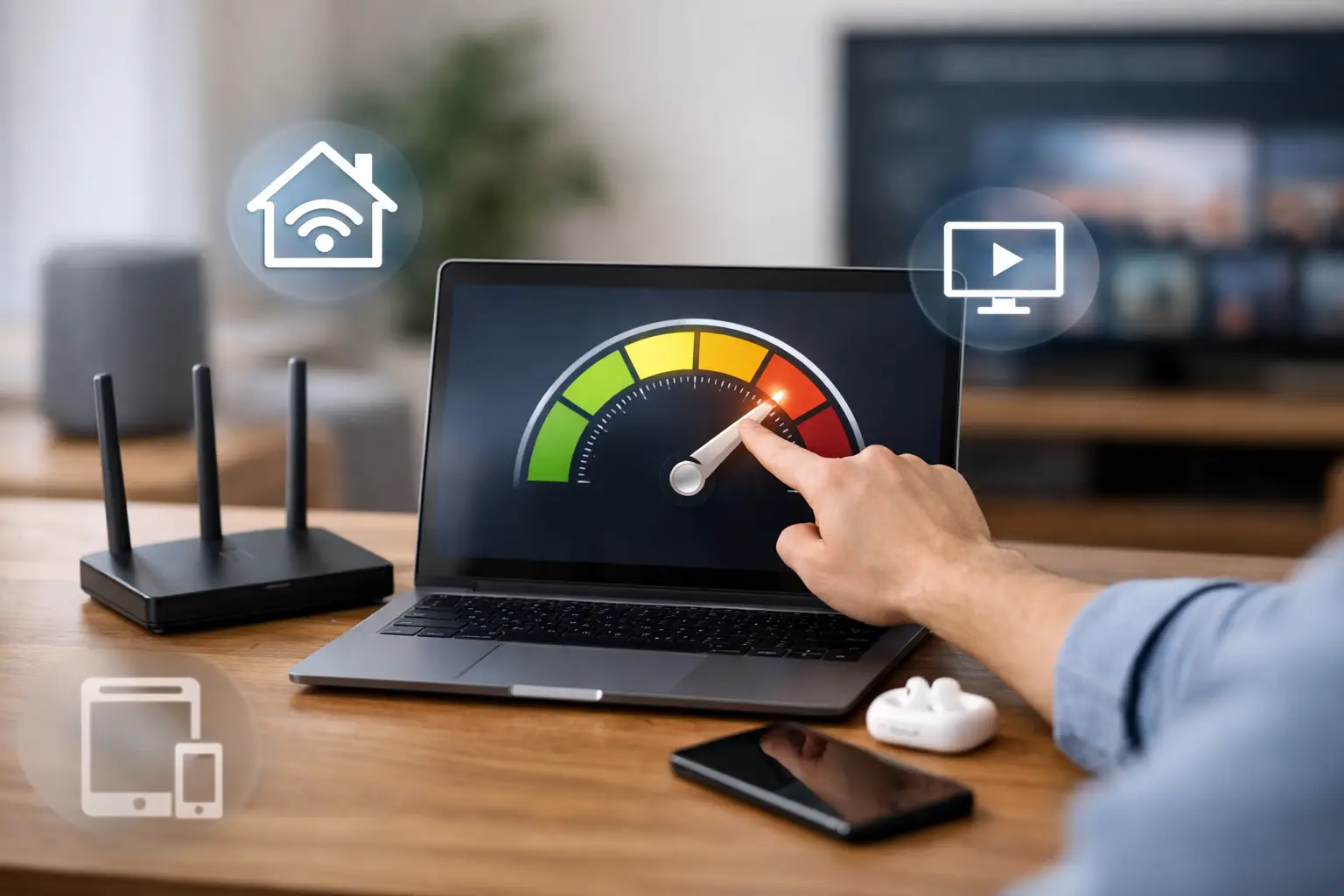
A video call freezing just as you need to speak, a movie dropping to blurry quality, or a game lagging at the worst possible moment usually points to one question: how to choose internet speed that actually fits your household. The right plan is not always the biggest number available. It is the speed that keeps everyone connected without paying for capacity your home will never use.
For most homes, choosing a plan comes down to three things: how many people use the connection at once, what they do online, and whether your home relies on Wi-Fi for nearly everything. A family streaming, working, studying, gaming, and running smart devices at the same time needs more room than a single person checking email and watching a show in the evening.
Start With What Happens Online at the Same Time
Internet plans are measured in Mbps, or megabits per second. Higher Mbps means your connection can move more data at once. That matters most when several devices are active together.
A common mistake is adding up every device in the house. A phone sitting on a nightstand uses very little data. The bigger issue is simultaneous demand: two people in video meetings while someone streams in 4K and another person downloads a large game update. Those activities compete for available speed.
Think about your busiest hour, not your quietest one. In many homes, that is after school or work, when TVs, laptops, tablets, phones, gaming consoles, and smart home equipment are all connected. If your connection feels slow only at those times, your plan may be undersized for your real usage pattern.
How to Choose Internet Speed by Household Type
There is no single Mbps number that works for every address. These ranges offer a practical starting point for choosing a plan.
Light internet use: 100 Mbps
A 100 Mbps plan can be a strong fit for one or two people who browse, use social media, shop, handle email, stream in HD, and make occasional video calls. It can also support a small household with moderate use, especially when large downloads and competitive online gaming are not everyday priorities.
This speed may feel limited if multiple people regularly stream in high definition or 4K while working from home. It is a smart value choice for lighter needs, but it leaves less breathing room during busy periods.
Busy households: 300 to 500 Mbps
For many families, 300 to 500 Mbps is the sweet spot. It provides enough capacity for several video streams, remote work, online learning, gaming, video calls, and connected devices operating at once.
This range works well when two or more people are online throughout the day. It is also a sensible choice for homes where a TV is often streaming while someone joins a meeting and another person games or downloads files. You do not have to ask everyone to get offline before a movie starts.
Heavy use and high-demand homes: 1 Gbps
A 1 Gbps, or 1,000 Mbps, plan is built for households that expect a lot from their connection. It is ideal for large families, serious gamers, content creators, homes with several remote workers, and anyone who frequently downloads or uploads large files.
Gigabit internet also gives busy homes more margin for the unexpected. A software update, cloud backup, multiple 4K streams, and work calls can happen at the same time with less chance of congestion. It will not make every website load instantly, since the website itself and your home Wi-Fi also matter, but it gives your household plenty of capacity to work with.
Download Speed Is Only Part of the Picture
Most internet shopping focuses on download speed because it affects streaming, browsing, gaming downloads, and everyday use. But upload speed deserves attention too, especially if you work or study from home.
Upload speed affects how quickly you send files, back up photos, share video, participate in clear video calls, and post content online. A household that only streams may focus mainly on downloads. A photographer sending client galleries, a small business owner using cloud tools, or a remote employee on frequent video meetings should ask about upload performance before selecting a plan.
Latency is another factor for gamers and video callers. It measures the delay between your device and the internet. Low latency helps games feel responsive and keeps real-time conversations more natural. More Mbps does not automatically guarantee low latency, but a quality connection, a properly placed router, and a wired Ethernet connection for key devices can make a noticeable difference.
Do Not Forget Your Wi-Fi Setup
Even an ultra-fast plan can feel disappointing if your Wi-Fi does not reach the rooms where you use it. Internet speed enters your home through a modem or gateway, but Wi-Fi has to travel through walls, floors, furniture, and sometimes older building materials. That can weaken the signal in bedrooms, basements, garages, or home offices.
Before upgrading your plan, consider where the problem happens. If every device is slow throughout the home, more internet speed may help. If the connection is excellent beside the router but weak upstairs, the issue is likely Wi-Fi coverage rather than your plan.
Place your router in a central, open location when possible. Avoid tucking it into a cabinet or placing it behind a TV. Larger homes may benefit from a mesh Wi-Fi system or additional access points that extend coverage to the spaces where people actually work, learn, and relax.
For gaming consoles, desktop computers, and workstations, a wired Ethernet connection is often the most reliable choice. It avoids wireless interference and helps deliver the stable performance those devices need.
Choose Unlimited Data for a Worry-Free Connection
Speed is only useful when you can use it without watching a monthly data meter. Streaming services, cloud backups, online gaming, security cameras, and system updates can add up quickly. A single large game download can use tens or even hundreds of gigabytes.
Unlimited data gives households more freedom to use their connection normally. You can stream, download, work, learn, and connect your devices without adjusting habits near the end of the month. For families and home offices, that predictability can matter as much as the advertised Mbps.
Check Availability Before Comparing Plans
The best internet speed on paper is not useful if it is unavailable at your address. Coverage can vary by neighborhood, road, building type, and local infrastructure. This is especially true outside larger town centers, where rural access and installation options may differ from one property to the next.
Ask what service is available at your exact address, what equipment is included, and whether professional installation is needed. It is also worth asking about expected upload speeds, unlimited data, Wi-Fi equipment, and support if you need help setting up your home network.
A local provider can make this process simpler. S-Connect helps households find practical internet options based on their location and everyday needs, from lighter-use plans to gigabit service for high-demand homes.
When Should You Upgrade Your Internet Speed?
Your plan may be due for an upgrade if slowdowns happen regularly while several people are online, video calls freeze even near the router, streaming buffers during normal use, or downloads take too long for your household’s routine. These signs do not always mean you need the fastest plan available, but they do mean it is time to look at both your speed and Wi-Fi setup.
On the other hand, if you have a high-speed plan but rarely use multiple devices or high-bandwidth services at once, moving to a lower tier could save money without changing your experience. The goal is a plan that feels dependable during your busiest moments, not one chosen just for its headline number.
Choose a speed that supports the way your home lives now, with enough room for the next device, the next workday, and the next family movie night.