

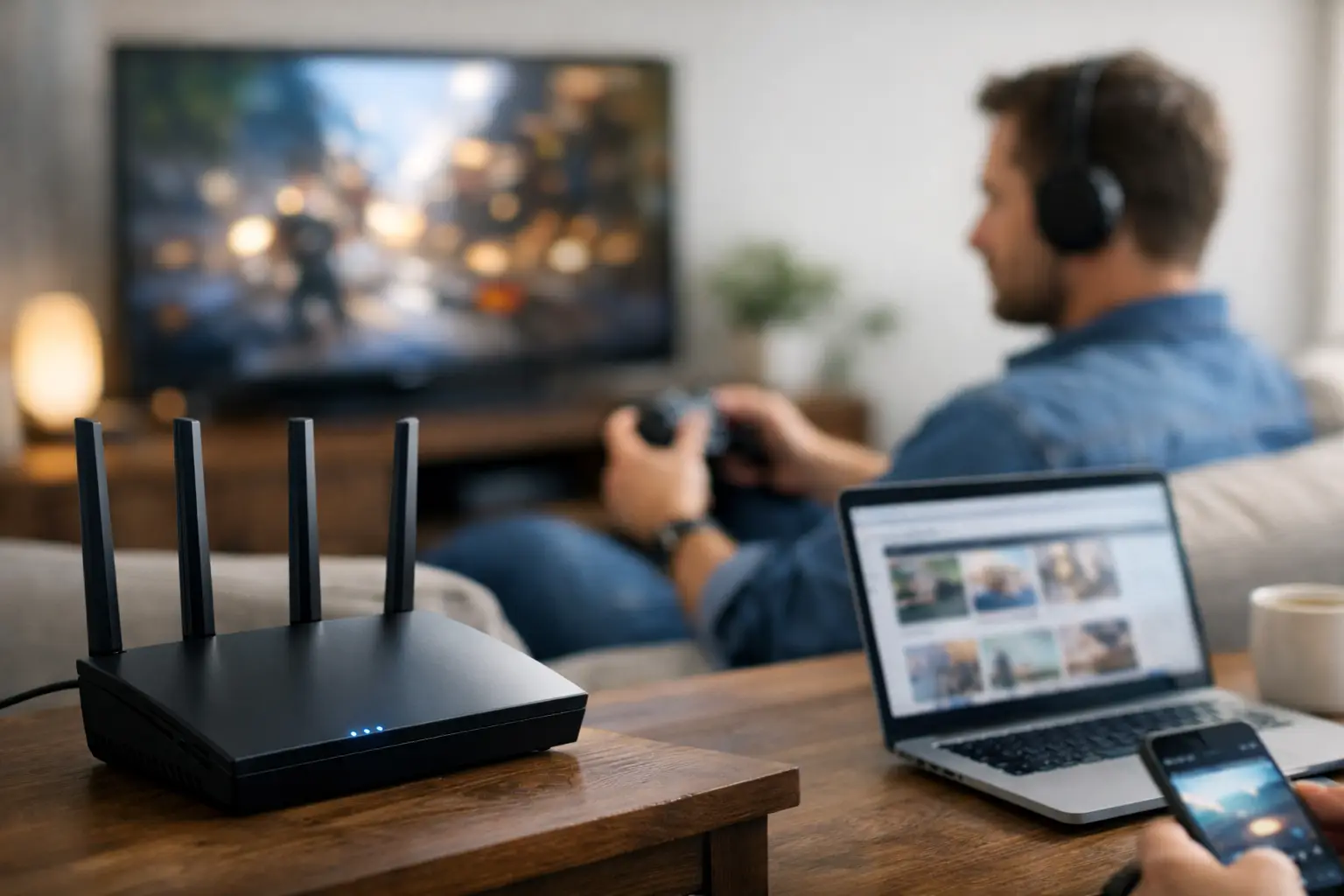
That question usually comes up right after a frustrating moment – a movie starts buffering, a video call freezes, or someone in the house asks why the Wi-Fi is slow again. If you are wondering, do I need gigabit internet, the honest answer is this: maybe, but not always. A 1 Gbps plan can feel fantastic in the right home, but plenty of households will get the speed they need from something lower and save money at the same time.
The key is not buying the biggest number on the page just because it sounds better. The right internet plan depends on how many people are online, what they are doing, how often they are doing it at the same time, and whether your equipment can keep up. For families, remote workers, gamers, and small businesses across Southwestern Ontario, choosing the right speed is less about hype and more about matching your real daily use.
What gigabit internet actually gives you
Gigabit internet means a connection with download speeds up to 1,000 Mbps. That is much faster than standard plans and more than enough for heavy online activity. In practical terms, it can support multiple 4K streams, large game downloads, smart home devices, cloud backups, video meetings, and several users online at once without making the whole house feel crowded.
That said, speed on paper is not always speed in real life. Your actual experience also depends on your router, your device, the age of your wiring, signal strength in different rooms, and whether you are using Wi-Fi or a wired connection. If your home network is weak, upgrading to gigabit alone may not fix the problem.
Do I need gigabit internet for my household?
For some homes, yes. For others, no.
If you live alone or with one other person and mostly browse, stream in HD, shop online, and take the occasional video call, gigabit may be more than you need. A lower-speed unlimited plan can often handle that comfortably.
If your home is busier, the answer changes. A house with several people streaming, gaming, working from home, attending online classes, and connecting smart TVs, cameras, speakers, and phones at the same time can benefit from gigabit internet. The more simultaneous activity you have, the more helpful that extra headroom becomes.
Think of it like road capacity. If only a few cars are driving, a smaller road works fine. But if everyone heads out at once, traffic builds fast. Gigabit gives your home more room to move.
When gigabit internet makes sense
Gigabit is often the right fit for large families and high-demand households. If five or more people are regularly online at the same time, speed can disappear quickly, especially when activities overlap. One person may be on a work call, another is downloading a game update, someone else is streaming in 4K, and a student is uploading assignments to the cloud.
It also makes sense for remote workers who deal with large files, creative professionals who upload videos or design assets, and home-based businesses that rely on dependable performance throughout the day. If your income depends on your connection staying fast and responsive, paying for more speed can be a practical choice, not a luxury.
Gamers may also prefer gigabit, though not always for the reason people think. Online gaming itself does not usually require massive download speeds. What matters more is low latency and a stable connection. But gigabit can help with huge game downloads, updates, and households where multiple consoles are in use.
When gigabit is probably too much
A lot of households are paying for top-tier speeds they rarely use.
If your internet habits are fairly routine – streaming a couple of shows, scrolling social media, checking email, using smart devices, and handling school or work tasks for one or two people – a plan in the 100 to 300 Mbps range may already feel fast. Even many homes with three or four users do very well below gigabit, especially if the connection is reliable and the data is unlimited.
This is where marketing can blur the line. Bigger speed numbers sound like better value, but if your usage does not come close to needing 1 Gbps, you may not notice much difference in everyday browsing or streaming. The jump from a weak plan to a solid mid-tier plan is often very noticeable. The jump from a strong mid-tier plan to gigabit can be harder to feel unless your household is truly demanding.
The biggest reason your internet feels slow might not be speed
Before moving to gigabit, look at the setup inside your home.
Older routers are a common bottleneck. So is poor Wi-Fi coverage, especially in larger homes, older homes with thicker walls, or properties where the signal has to reach a basement office, backyard camera, or upstairs bedrooms. In those cases, the issue may be coverage rather than your internet package.
Device limits matter too. Many phones, laptops, and TVs cannot actually use the full benefit of a gigabit connection over Wi-Fi. If your hardware tops out below that level, you may be paying for speed your devices never fully access.
Network congestion inside the home can also create problems. If everyone is online through a basic router that struggles to manage many connected devices, the connection can feel inconsistent even when the incoming speed is strong. Sometimes a router upgrade, better placement, or a mesh Wi-Fi system makes a bigger difference than moving to a faster plan.
A practical way to decide
If you are still asking, do I need gigabit internet, start with your busiest hour, not your quietest one. Picture the time of day when everyone is home and online. Count how many people are connected and what they are doing at the same time.
If your home regularly has multiple 4K streams, large downloads, cloud backups, work calls, smart devices, and gaming sessions happening together, gigabit is a smart choice. If your household has lighter overlap and mostly standard use, you likely have room to choose a lower plan without sacrificing comfort.
It also helps to think about how long you plan to stay in the home and how your needs are changing. A household with growing kids, more remote work, or more connected devices may want extra capacity now rather than upgrading later. On the other hand, if your usage is stable and moderate, there is no need to overbuy.
Cost, value, and the real question to ask
The better question is not just do I need gigabit internet. It is, will gigabit improve my daily experience enough to justify the price?
For some people, absolutely. If internet issues interrupt work, school, entertainment, or business, a faster plan can remove friction and make the whole household run better. That convenience has real value.
But value is not the same as buying the biggest package available. A dependable unlimited plan with the right speed for your home is usually the smarter buy than an oversized plan that sounds impressive but solves nothing. Reliability, strong Wi-Fi coverage, responsive support, and clear pricing matter just as much as raw speed.
That is especially true in communities where households want straightforward service and dependable local help, not a complicated sales pitch. A provider like S-Connect focuses on matching customers with practical options that fit how they actually live, whether that is a fast everyday plan or full gigabit for a busier home.
So, do you need gigabit internet?
If your home is packed with connected devices, heavy streaming, remote work, online learning, gaming, and large file transfers all happening at once, gigabit internet can be a great fit. It gives you breathing room and helps your connection stay fast when demand spikes.
If your household is smaller or your online habits are more typical, you may be perfectly happy with less. And if your internet feels slow today, check your Wi-Fi setup before assuming speed is the only issue.
The best plan is the one that keeps up with real life in your home – without making you pay for bandwidth you will never use.