

If your video calls freeze when the weather shifts or your movie buffers the second everyone gets home, you do not need a lecture about rural internet. You need a connection that works. The best rural wifi solutions are the ones that match how your household actually uses the internet – and that means looking past flashy claims and focusing on speed, stability, data limits, and what is truly available at your address.
For homes in rural areas, there is rarely one perfect option for everyone. A family streaming on three TVs has different needs than a farm office sending large files, and both are different from a cottage that only needs basic browsing on weekends. The right setup depends on your location, line-of-sight, nearby infrastructure, and how much disruption you can tolerate during peak hours or bad weather.
What makes the best rural wifi solutions worth it
The biggest mistake people make is shopping by advertised speed alone. Speed matters, but it is only one part of a usable connection. A rural internet service can look fast on paper and still feel frustrating if latency is high, data is capped, or performance drops every evening.
A better way to judge service is to think about your daily routine. Remote work and online classes need steady upload speeds and low lag. Streaming and gaming need enough capacity for multiple devices at once. Smart home systems, security cameras, and cloud backups quietly add demand in the background. That is why the best rural wifi solutions usually balance four things well: reliable performance, enough speed for your household, unlimited or high data allowances, and support that is easy to reach when something goes wrong.
Local support also matters more than many people expect. In rural communities, installation conditions are not always straightforward. Tree cover, long driveways, older homes, and patchy cell coverage can all affect the final result. Working with a provider that understands regional conditions can save a lot of guesswork.
Best rural wifi solutions by connection type
Fixed wireless internet
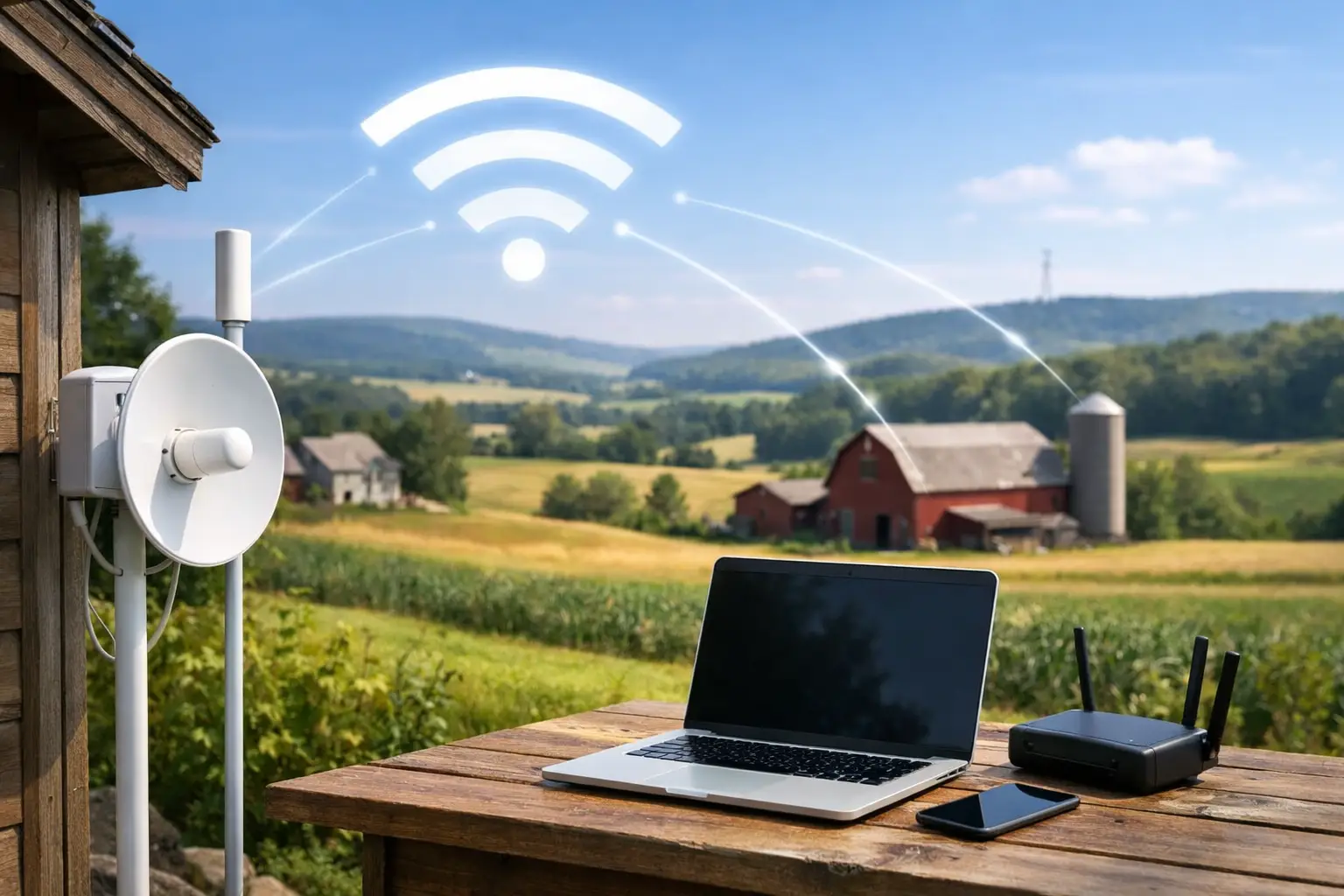
Fixed wireless is often one of the strongest options for rural households because it is designed to reach areas where cable or fiber do not extend directly. It uses a receiver installed at your home to connect with a nearby tower, which can deliver solid speeds for everyday use, streaming, remote work, and connected home devices.
Its biggest advantage is availability in places traditional wired service does not reach. Installation is usually faster than waiting for major infrastructure expansion, and many plans are built for full-time household use. The trade-off is that performance can vary based on terrain, tower congestion, and visibility between your property and the serving equipment. In some areas, heavy weather can also affect consistency.
For many households, though, fixed wireless hits the sweet spot between speed, reliability, and practical access. If it is available at your address from a provider with strong regional coverage, it should be high on your list.
Cable or fiber-backed service where available
Some rural and near-rural homes can access internet through existing cable lines or fiber-adjacent networks, even if they are outside larger urban centers. When this option is available, it is often the easiest choice for homes with heavy internet use. It tends to offer stronger consistency, better support for multiple devices, and speeds that can handle streaming, work, gaming, and uploads without constant compromise.
The catch is simple: availability is uneven. One road may qualify while the next does not. That is why address-level service checks matter. If a provider can deliver cable-based or fiber-backed service to your property, it is often one of the best long-term rural internet choices, especially if unlimited data is included.
5G or LTE home internet
Cellular-based home internet has improved quickly, and in some rural areas it can be a very practical option. Setup is often simple, with a modem or gateway that uses the mobile network instead of a wired line. For households that need internet fast and do not want a complicated install, this can be appealing.
The challenge is consistency. Cellular service depends heavily on signal strength, tower load, and network management. Performance can be good in one location and disappointing a few miles away. It may also slow down during busy times, especially in areas where many users rely on the same tower. For light to moderate use, it can work well. For larger households, serious gamers, or people working full-time from home, it may feel less predictable.
Satellite internet
Satellite has a place in the rural market because it can reach remote properties where other services simply are not available. If your home is far from wired infrastructure and fixed wireless coverage does not reach you, satellite may be the only realistic path to broadband.
That said, it usually comes with trade-offs. Latency is often higher than other connection types, which can affect gaming, video calls, and anything that needs real-time responsiveness. Weather can also play a role, and pricing may be less attractive once equipment and monthly costs are factored in. Satellite is best viewed as an access solution when better-grounded alternatives are off the table, not automatically the first choice.
How to choose the best rural wifi solutions for your home
Start with what is actually available, not what you hope is available. Rural internet decisions are won or lost at the address level. A service type that works beautifully for your neighbor may not perform the same way at your property.
Next, match the plan to your household habits. If you have two remote workers, kids streaming after school, and smart devices running all day, go bigger than your minimum estimate. Households almost always outgrow undersized plans faster than they expect. On the other hand, if your use is basic browsing, email, and occasional video, you may not need top-tier speeds.
Data policy is another deal-breaker. The best rural wifi solutions for modern households typically offer unlimited data or generous allowances that do not punish normal use. Caps can make a cheaper plan expensive very quickly, especially if your home depends on streaming instead of traditional TV or if cloud backups run in the background.
Installation support deserves attention too. Rural service works best when equipment is placed properly the first time. A professional install can improve signal quality, reduce dead spots, and help avoid the common problem of blaming WiFi when the real issue is modem placement or outdoor reception.
Your indoor WiFi setup matters more than you think
Even a good rural internet connection can feel slow if your in-home WiFi is poorly set up. Large farmhouses, finished basements, metal roofing, thick walls, and detached offices all create challenges that standard router placement does not solve.
If your signal is strongest in the kitchen but weak in bedrooms or workspaces, the issue may be coverage inside the home rather than the internet service itself. In those cases, upgrading to a better router or adding mesh WiFi can make a major difference. This is especially helpful for families with many connected devices or homes with awkward layouts.
It is also smart to separate internet speed from WiFi coverage in your thinking. The service coming into the home and the signal moving around the home are related, but they are not the same thing. A better plan will not always fix a bad router, and a new router will not compensate for an unstable connection from outside.
When bundling makes practical sense
For many rural households, convenience matters almost as much as speed. Managing internet, TV, phone, mobile, or security services through one provider can simplify billing and support. It can also save time when you need help, because you are not bouncing between companies that each blame the other.
That is one reason regional providers continue to stand out in rural markets. A company like S-Connect can be a strong fit for households that want local service, straightforward plan options, and help choosing the right setup for both home internet and connected services. That kind of support is valuable when coverage varies from road to road and you need real answers, not generic sales language.
The best rural wifi solutions are the ones built for real life
There is no single winner for every rural address. Fixed wireless may be the best choice for one family, while another gets stronger value from cable-backed service or a well-positioned cellular setup. The right answer comes from balancing speed, reliability, unlimited use, home layout, and local availability.
If you are shopping for rural internet, think beyond the headline number. Ask how the service performs in the evening, whether data is truly usable for a modern household, and what kind of installation and local support comes with it. The connection that fits your real life is the one you will be happiest with six months from now.