
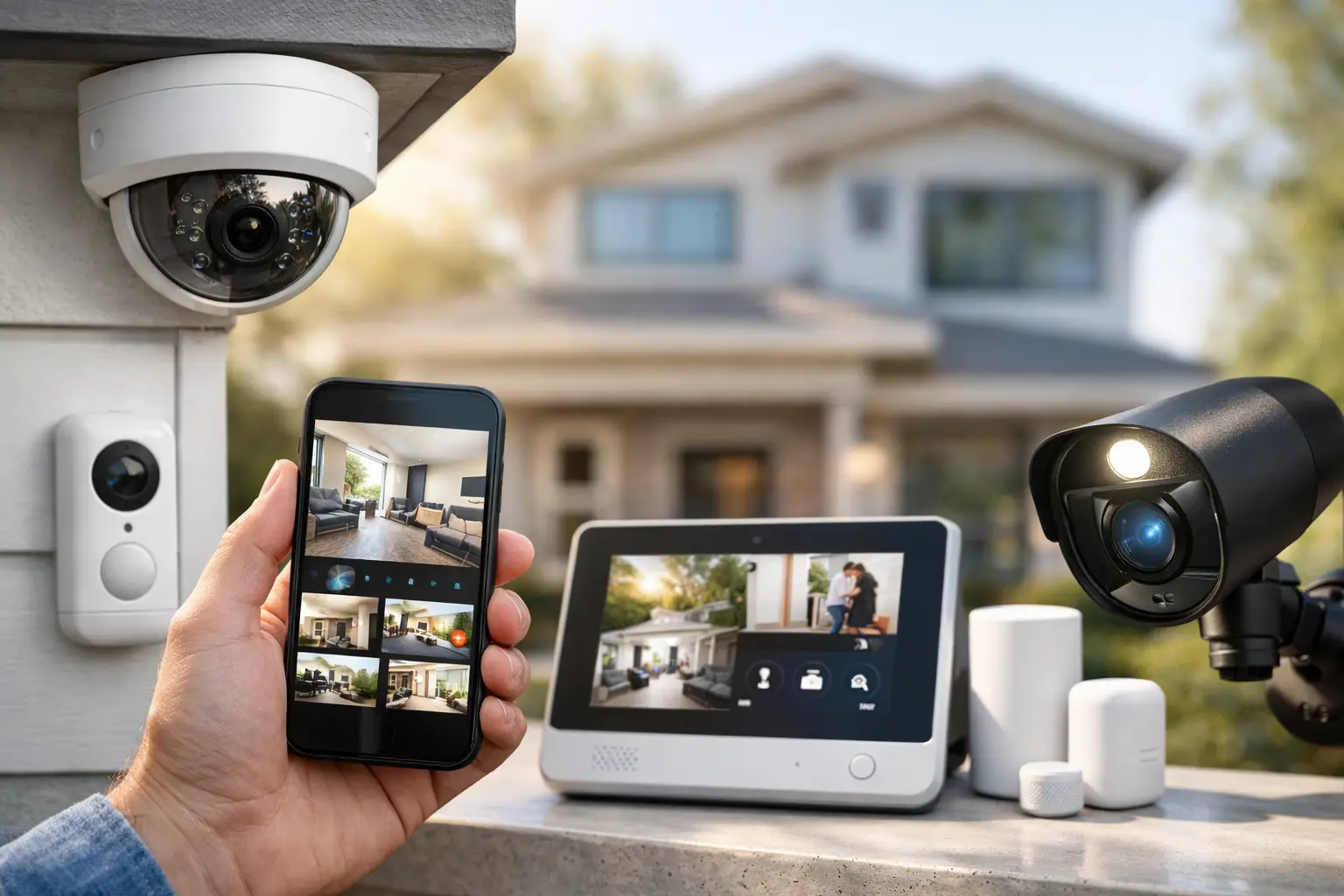
A doorbell alert at 2:13 a.m. feels very different when you know who is watching your home, how fast they can respond, and whether your internet setup can keep everything online. That is why home security monitoring options matter just as much as the cameras, sensors, and alarms themselves.
For most households, the right choice comes down to three things – how much responsibility you want to keep, how quickly you need a response, and how reliable your connection is day to day. A family in town with strong broadband may want app-based controls and live video access. A rural homeowner may care more about backup communication and steady performance when weather rolls in. The best setup is not always the most expensive one. It is the one that fits how you actually live.
What home security monitoring options really include
When people shop for security, they often focus on equipment first. Cameras, motion detectors, door sensors, smart locks, and video doorbells get most of the attention. But monitoring is the part that decides what happens after something triggers.
That could mean an alert sent to your phone, a professional monitoring center calling you within seconds, or emergency dispatch if an alarm is verified. In other words, monitoring is the response layer. If the equipment is the eyes and ears of the system, monitoring is the action plan.
There are three main home security monitoring options most homeowners will consider: self-monitoring, professional monitoring, and hybrid monitoring. Each has clear advantages, and each has trade-offs.
Self-monitoring works best for hands-on homeowners
Self-monitoring means your system sends alerts directly to you through a mobile app, text, or email. If a sensor is tripped or a camera spots motion, you decide what happens next. You can check the live feed, call a neighbor, trigger a siren, or contact emergency services yourself.
This option is usually the lowest monthly cost, and sometimes there is no monthly fee at all. It is appealing for budget-conscious households, renters, and people who want smart home features without committing to a long-term service plan. If you are already comfortable managing devices from your phone, self-monitoring can feel simple and convenient.
The trade-off is obvious. If you miss the alert because you are asleep, in a meeting, on a flight, or in an area with weak signal, no one else is stepping in. That does not make self-monitoring a bad choice. It just means it is strongest for people who are highly engaged and usually available.
For many households, self-monitoring makes sense when the main goal is awareness rather than emergency response. You want to know when a package is delivered, when the kids get home, or when someone enters the garage. It is less reassuring if your goal is immediate backup during a break-in, fire event, or medical emergency.
Professional monitoring offers the most support
Professional monitoring connects your security system to a staffed monitoring center 24/7. When an alarm is triggered, trained agents review the signal, contact you, and if needed, request emergency response.
This is the strongest choice for homeowners who want constant coverage, especially families, older adults, frequent travelers, and small business owners managing inventory or equipment from home. It reduces the pressure on you to be the only person watching every alert.
It also adds consistency. A professional team does not stop monitoring because your phone is on silent or you are away for the weekend. If your alarm goes off at 3 a.m., someone is already in position to act.
The downside is cost. Professional monitoring usually comes with a monthly fee, and some providers require specific equipment or service agreements. Response procedures can also vary. Some services verify alerts through audio, video, or multiple sensors before escalating. That can reduce false alarms, but it also means not every trigger leads to the same response.
If reliability is your top priority, this is usually the option worth paying for. And if your home depends on connected devices, it helps to make sure your internet service is stable enough to support cameras, app controls, and notifications without constant interruptions.
Hybrid home security monitoring options give you more flexibility
Hybrid monitoring sits in the middle. You get app access and direct alerts like a self-monitored system, but you also have professional backup for serious events or during selected hours.
For many homeowners, this is the sweet spot. You stay connected to your home in real time, but you are not carrying the entire burden alone. Some hybrid setups let you turn professional monitoring on or off as needed. That can be useful if you travel seasonally, own a cottage, or want more coverage during holidays.
The main benefit is flexibility. The main challenge is clarity. Hybrid plans can vary a lot by provider, so it is important to understand exactly what is covered, when agents respond, and whether video verification or cellular backup is included.
Wired, wireless, and cellular backup all affect monitoring performance
The type of monitoring you choose is only part of the picture. The way your system communicates matters too.
A wired system can be very stable, but installation is more involved and retrofitting an older home can cost more. Wireless systems are easier to install and expand, which is one reason they are so popular with modern smart home setups. They are a strong fit for households that want quick installation and room to grow.
Cellular backup is one feature that deserves extra attention. If your security system depends only on your home internet and the connection goes down, your monitoring may be interrupted. A system with cellular backup keeps sending alerts even during an outage. For rural areas, larger properties, or homes that see occasional service disruptions, that extra layer can make a real difference.
This is where a dependable home connection still matters. Cameras, cloud recordings, mobile alerts, and smart device controls all perform better when your network can handle them consistently. If your household already streams, games, works from home, and runs connected devices all at once, security traffic should not be an afterthought.
How to choose the right fit for your home
The best decision usually starts with your routine, not the equipment catalog. If someone is almost always home and comfortable managing alerts, self-monitoring may be enough. If your schedule is busy and unpredictable, professional monitoring adds peace of mind. If you want control with backup, hybrid service is worth a close look.
You should also think about the type of protection you need most. Burglary monitoring is common, but many systems also cover smoke alarms, carbon monoxide alerts, flood sensors, and medical pendants. A family with young children may prioritize door and window alerts. An older homeowner may care more about emergency dispatch support. A home office may need camera coverage, entry alerts, and better visibility when deliveries arrive.
Budget matters, but so does value. A lower monthly bill is attractive until you realize you are the one responsible for every alert, every hour of the day. On the other hand, paying for full-service monitoring may not be necessary if you mainly want visibility and smart notifications.
Local support is another factor people underestimate. Setup should be straightforward, but when something needs adjustment, real help matters. That is especially true in communities where customers want fast answers, reliable installation, and service that feels accessible instead of outsourced and distant. For households in Southwestern Ontario looking to bundle connected home services with dependable internet, providers like S-Connect can make that process a lot simpler.
Questions to ask before you sign up
Before choosing among home security monitoring options, ask how alerts are handled, whether professional response is included, and what happens if your internet goes down. Check whether the system supports mobile access, video storage, smart home integration, and expansion later.
You will also want to ask about installation, contract terms, equipment ownership, and cancellation policies. Some systems look affordable upfront but become less appealing once add-on fees and service requirements are clear. Others cost more monthly but include the features that matter most, like 24/7 monitoring and backup communication.
The right home security setup should feel dependable, not complicated. You should know who gets the alert, what happens next, and how your system stays connected when it matters most.
Choosing between self-monitoring, professional service, and hybrid coverage is really about deciding how much support you want standing behind your home. Start there, and the rest of the decision gets much easier.