

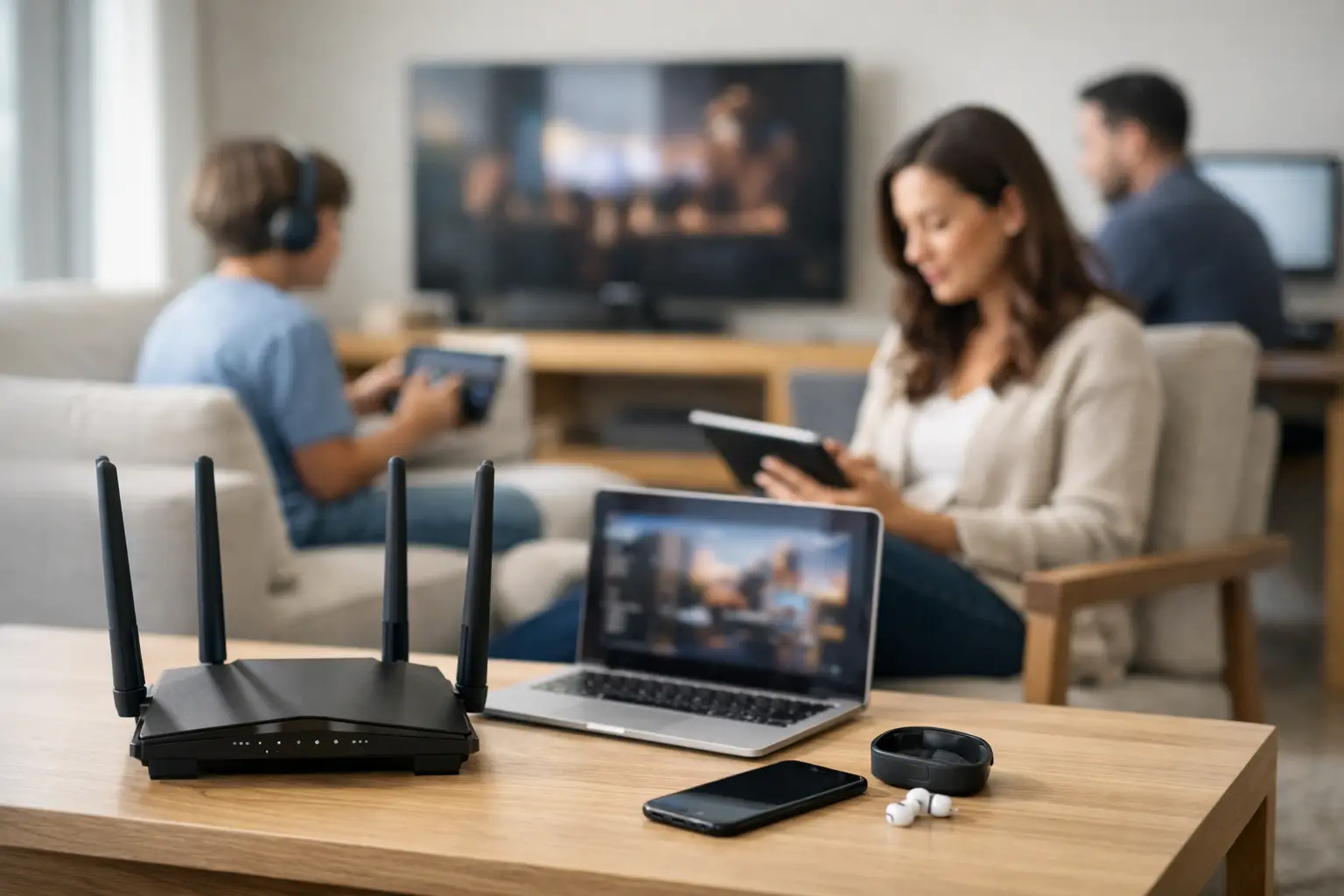
The problem usually shows up around 7 p.m. One person starts streaming a movie, someone else joins a video call, a game begins downloading in the background, and suddenly the whole house feels slower. If you need internet for multiple devices, the real question is not just how fast your plan looks on paper. It is whether your connection can handle real life in a busy home or small business.
In many households, internet demand stacks up quickly. Smart TVs, laptops, phones, tablets, gaming consoles, security cameras, and smart home devices all compete for bandwidth. Add remote work, online classes, cloud backups, and 4K streaming, and a basic plan can start to feel small fast. That is why choosing the right service means looking at speed, data, consistency, and the way your home actually uses the connection.
What internet for multiple devices really means
A plan that works for multiple devices is not only about supporting a certain number of gadgets connected to Wi-Fi. Almost any modern router can connect dozens of devices. The bigger issue is whether your internet service can keep up when several of those devices are active at the same time.
For example, a phone sitting idle on Wi-Fi uses very little. A smart thermostat also does not ask for much. But two TVs streaming in high definition, a work laptop on Zoom, an online gamer, and a tablet downloading updates can put real pressure on a connection. This is where households often confuse device count with actual usage. Ten connected devices may be easy to handle, while four busy devices can expose a weak plan.
That is why practical buyers should focus on peak-hour performance. If your internet slows down when everyone is home, that is a sign your current speed tier may not match your household habits.
How much speed do you actually need?
There is no one-size-fits-all answer, but there are clear patterns. A smaller household that mostly browses, checks email, uses social media, and streams on one or two screens can often do well with around 100 Mbps. Once you add multiple streamers, remote work, school platforms, gaming, and smart devices, moving into the 250 to 500 Mbps range often makes more sense.
Homes with several heavy users usually benefit from 500 Mbps to 1 Gbps service, especially if people are online at the same time throughout the day. This is common in family homes, shared rentals, and houses with remote workers or students. Faster plans also give more breathing room for updates, cloud syncing, and new devices added over time.
The trade-off is simple. If you buy too little speed, you may save money upfront but deal with buffering, lag, and frustration. If you buy far more than you use, you may pay for capacity you never notice. The best fit is the plan that matches your busiest hours, not your quietest ones.
Why unlimited data matters for busy homes
Speed gets most of the attention, but data caps can create just as many problems. Internet for multiple devices often means more background usage than people expect. Phones back up photos automatically. Consoles download massive game files. Smart TVs stream for hours. Security cameras upload footage. Laptops sync files and install updates.
With limited data, heavy use can lead to overage fees or throttling. That is why unlimited data is such a strong value for families, streamers, gamers, and home-based businesses. It removes the stress of watching usage and lets everyone use the connection naturally.
This matters even more in homes where internet is the center of daily life. If your connection supports entertainment, work, school, and communication all at once, unlimited usage is less of a nice extra and more of a practical requirement.
The router matters more than people think
A fast plan can still feel slow if the Wi-Fi setup is weak. This is one of the most common reasons people assume they need more speed when the real problem is coverage inside the home.
If your router is older, poorly placed, or not designed for a larger space, some rooms may struggle even with a strong internet package. Thick walls, multiple floors, detached offices, and device-heavy households can all create dead zones or weak performance.
In these cases, upgrading the router or using a mesh Wi-Fi system may make a bigger difference than changing plans. Placement matters too. A router hidden in a basement corner or tucked behind furniture will not perform at its best. For homes in Stratford, London, Listowel, Mitchell, and other Southwestern Ontario communities where layouts vary from compact town homes to larger rural properties, in-home setup can have a major impact on day-to-day performance.
Best plan types for different households
The right internet for multiple devices depends on who is using it and how. A retired couple with a smart TV and a few phones will have different needs than a family of five or a home office with video meetings all day.
For lighter use, an entry-level high-speed plan may be enough if there is only occasional streaming and general browsing. For average family use, a mid-tier plan usually delivers the best balance of price and performance. This is often where you get enough speed for several simultaneous activities without paying for more than you need.
For heavy-use homes, large families, gamers, and remote workers, higher-tier plans make more sense. They provide the headroom needed for multiple streams, large downloads, and stable video calls happening all at once. Small businesses running from home or storefront locations should also think about reliability during business hours, not just maximum speed.
It depends on your habits. If your internet feels slow only during major downloads, a modest upgrade might solve it. If the connection struggles every evening, a more substantial change is usually the smarter move.
Signs your current plan is too small
Most people know something is off before they know why. Web pages may load slowly when several people are online. Streaming quality may drop without warning. Video calls can freeze or sound choppy. Online games may lag at the worst time. Smart devices may disconnect or respond slowly.
If these issues happen regularly, especially during busy hours, your home may have outgrown its current plan. That does not always mean you need the fastest package available, but it usually means your present setup is no longer keeping up with your household.
A good provider should help you choose based on real usage, not just sell the highest number. That is especially valuable for practical buyers who want straightforward advice and dependable service instead of technical guesswork.
Reliability beats advertised speed alone
Many shoppers compare plans by headline speed and stop there. But the better question is how stable the connection stays when it matters. A plan that performs consistently during work calls, evening streaming, and weekend gaming is worth more than a flashy speed claim that feels uneven in real use.
That is where local service can make a difference. Providers that understand regional coverage, installation conditions, and neighborhood network patterns are often better positioned to recommend the right fit. S-Connect serves both town and rural customers with a focus on strong value, unlimited usage, and practical support, which matters when households need dependable internet without the runaround.
This is especially important for customers outside major urban cores. Rural and small-town households often need clear answers about availability, equipment, and expected performance. Good service starts with realistic recommendations.
Choosing the right internet for multiple devices
Start with your busiest hour. Count the people in your home, then think about what they are doing at the same time. If two people stream, one person games, one works on video calls, and several phones stay connected all day, shop for a plan built for that demand. Do not choose based only on solo browsing or occasional use.
Next, consider whether unlimited data is included and whether your Wi-Fi equipment matches the plan. A fast connection paired with poor in-home coverage will always feel disappointing. Finally, look for a provider that offers clear pricing, installation help, and local support when you need it.
Good internet should not force your household to take turns. The right plan gives everyone room to work, watch, play, and connect without constant slowdowns. If your home is filling up with screens, smart devices, and daily online demands, choosing internet that keeps pace is one of the simplest upgrades you can make.