

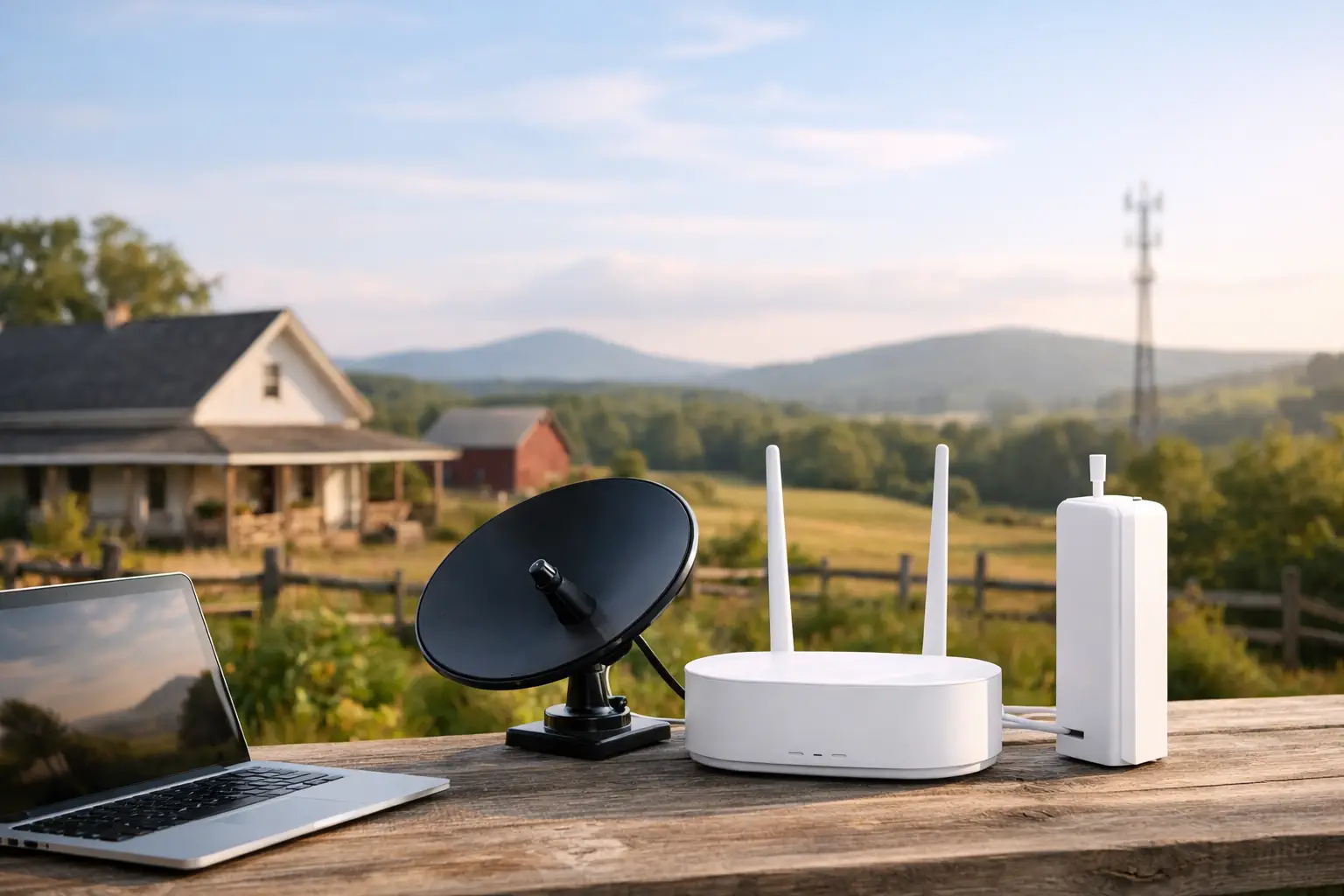
If your video calls freeze every afternoon, your kids cannot stream class videos, or a simple software update takes half the evening, you do not need a lecture about why internet matters. You need a connection that works. For many families and small businesses outside major city cores, finding the right rural internet options for homes comes down to one question: what is actually available at your address, and how well will it hold up in real life?
That is where rural internet gets practical fast. The best option is not always the one with the biggest advertised speed. It is the one that fits your location, your household habits, and your budget without leaving you stuck with slowdowns, data caps, or unreliable service when you need it most.
What rural internet options for homes really include
When people hear rural internet, they often think satellite first. That is only part of the picture. Depending on where you live, your choices may include cable, fiber-backed service through nearby infrastructure, fixed wireless, LTE or 5G home internet, DSL, and satellite.
In many parts of Southwestern Ontario and similar regional markets, coverage can vary block by block or road by road. One home may qualify for fast cable-based service with unlimited data, while another a few miles away may need fixed wireless or LTE. That is why address-level availability matters more than broad coverage claims.
Cable and fiber-adjacent service: often the best value
If cable or fiber-connected infrastructure reaches your area, this is usually the strongest place to start. These services tend to offer the most balanced mix of speed, stability, and monthly value for everyday households.
For families with multiple users, this matters. Streaming on several TVs, gaming, smart home devices, remote work, and school platforms all compete for bandwidth. A solid cable or fiber-adjacent connection handles that kind of traffic better than many rural alternatives, especially when the plan includes unlimited data.
There are still trade-offs. Availability can be limited outside town centers, and speed can vary based on the local network footprint. But when this option is on the table, it is often the closest thing to urban-grade internet without the urban address.
Fixed wireless: a strong rural option when wired service stops
Fixed wireless is one of the most practical rural internet options for homes when cable and fiber are not available. It delivers internet from a nearby tower to equipment installed at your home, typically using a rooftop or exterior receiver.
For many rural properties, fixed wireless hits the sweet spot between performance and accessibility. Installation is usually faster than building new wired infrastructure, and service can be much more consistent than older rural technologies. It is especially useful for households that need dependable browsing, video streaming, remote work access, and day-to-day online use.
The main catch is line of sight and signal quality. Trees, terrain, and distance from the tower can affect performance. Weather can also have some impact, though a properly installed system should still provide a reliable experience for most households. If you are considering fixed wireless, ask about realistic speeds at your exact address, not just the best-case numbers in an ad.
LTE and 5G home internet: convenient, but check the fine print
LTE and 5G home internet can be appealing because setup is often simple. In some cases, you can plug in a gateway and get online quickly without a major installation appointment. That convenience makes it attractive for renters, seasonal properties, and households that need service fast.
Performance, though, depends heavily on local cellular coverage and network congestion. A plan may feel fast in the morning and noticeably slower in the evening when more people are using the tower. That does not make it a bad option. It just means it is more sensitive to local conditions than a wired connection.
Another point to watch is data policy. Some mobile-based home internet plans advertise generous usage, but speeds may be reduced after a threshold or during busy periods. If your home streams a lot of video, backs up files to the cloud, or supports remote work all day, those details matter.
Satellite internet: broader reach, more compromises
Satellite has improved, and for very remote properties it may be the only realistic choice. It can bring internet to homes far beyond cable routes and fixed wireless footprints, which gives it a clear advantage in terms of reach.
But satellite still comes with trade-offs. Latency is often higher than other internet types, which can affect gaming, video calls, and anything that depends on real-time response. Weather can also interfere with signal quality. Pricing may be higher, and some plans still have usage policies that are less flexible than unlimited wired service.
That said, satellite can be the right fit for households that mainly browse, stream lightly, check email, and need a serviceable connection where no other provider can reach. It is not ideal for every use case, but it solves a very real access problem.
DSL: sometimes available, often limited
In some rural areas, DSL is still an option through older phone-line infrastructure. If it is already in place, it can be easy to activate and may be enough for light internet use.
The challenge is speed. DSL performance drops with distance from the service source, and in many rural settings it struggles to keep up with modern household needs. A single video stream may be fine, but multiple users working, learning, and streaming at once can expose its limits quickly. It is usually a fallback choice rather than the first recommendation.
How to choose the right service for your home
The smartest way to compare rural internet options for homes is to start with how you actually use the internet. A retired couple checking email and watching one TV at a time needs something very different from a household with remote workers, gamers, smart cameras, and several active devices all day.
Speed matters, but consistency matters just as much. A plan that looks cheaper on paper may cost you more in frustration if it slows down every evening or enforces strict usage limits. For many homes, unlimited data is not a luxury anymore. It is part of making streaming, work, and school reliable month after month.
You should also think about installation and support. Rural service often works best when there is clear communication about coverage, setup requirements, and what to expect after activation. Local support can make a real difference, especially if weather, terrain, or equipment placement affects performance.
What families, remote workers, and gamers should prioritize
Families usually benefit most from stable speeds and unlimited data. Buffering during movie night is annoying, but hitting a usage limit halfway through the month is worse. If multiple people are online at once, prioritize a service with enough capacity to handle concurrent use.
Remote workers should pay close attention to upload performance and reliability. Download speed gets the headlines, but video meetings, cloud backups, and file sharing all depend on a strong connection both ways. If your income depends on staying connected, consistency should rank above bargain pricing.
Gamers need low latency as much as speed. That is why cable, fiber-adjacent service, and some fixed wireless options usually outperform satellite for competitive play. If gaming is a priority in your home, ask specifically about ping and peak-hour performance.
Why local availability beats generic national claims
National ads make rural internet sound simple. It rarely is. The truth is that coverage, speed, and service quality are local. A provider that performs well in one township may not offer the same experience on the next road over.
That is where a regional provider can stand out. Companies that understand local infrastructure, installation realities, and community needs can give you a more honest answer about what will work at your address. For households in Southwestern Ontario, that local approach is often the difference between guessing and getting connected with confidence.
S-Connect serves rural and town-based communities with practical internet options built around speed, unlimited usage, and straightforward support. That matters when you want more than a plan on paper. You want service that fits real homes, real roads, and real everyday demands.
The best rural internet option is the one that fits your address
There is no universal winner for every rural property. If cable or fiber-adjacent service is available, it is often the best all-around option. If it is not, fixed wireless may offer the right mix of speed and reliability. LTE or 5G can be a convenient solution in the right coverage area, while satellite remains an important option for homes beyond other network footprints.
The key is to compare realistic performance, not just advertised numbers. Ask what is available, what is unlimited, what installation involves, and how the connection holds up during busy hours. A good rural internet plan should make daily life easier, not force your household to work around it.
A reliable connection changes how your home functions. It turns streaming, work, school, security, and everyday communication into something you can count on, even when you live a little farther from town.