

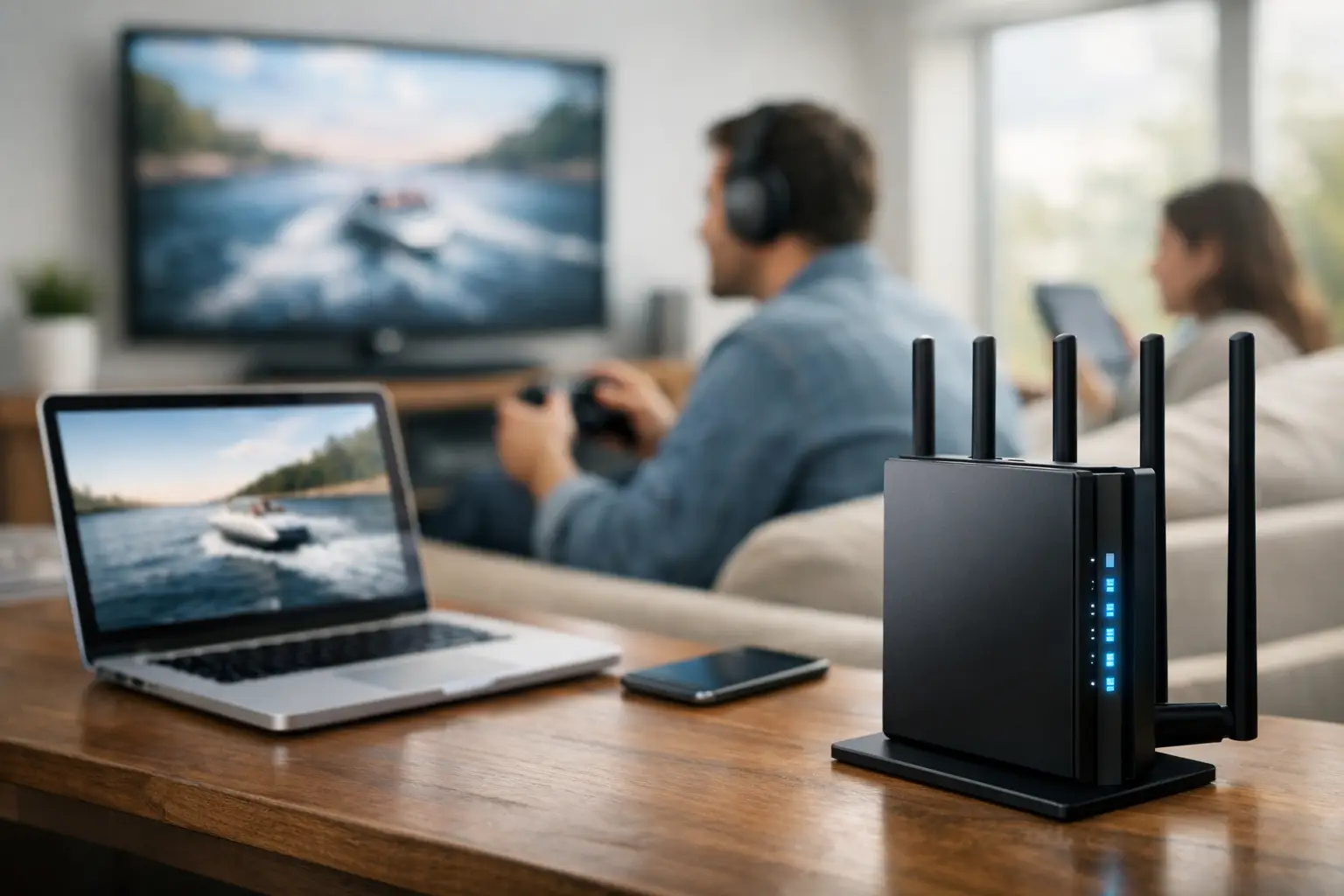
The fastest plan on the page always gets attention. If you’re comparing internet options and asking is gigabit internet worth it, the honest answer is simple – sometimes yes, sometimes not. It depends on how many people are online, what you do every day, and whether your current service is actually holding you back.
For some homes, gigabit internet feels like a major upgrade right away. For others, it is more speed than they will ever use. The key is knowing the difference before you pay for a bigger plan than you need.
Is gigabit internet worth it for most households?
A gigabit plan gives you up to 1,000 Mbps of download speed, which is far beyond what many households used a few years ago. But internet use has changed fast. Homes now run multiple 4K TVs, video calls, cloud backups, gaming consoles, smart home devices, tablets, and laptops all at once. In a busy household, that adds up.
Still, most people do not need gigabit speed just to browse, stream on one or two devices, check email, or attend the occasional Zoom meeting. If your household is small and your internet habits are light, a plan in the 100 to 300 Mbps range may feel just as good in day-to-day use.
That is why this question matters. Gigabit internet is not automatically the best value just because it is the fastest option. The best value is the plan that gives your home enough speed, enough reliability, and enough room to grow without paying for performance you will never notice.
When gigabit internet is absolutely worth it
There are homes where gigabit service makes a real difference from day one. Large families are the clearest example. If several people are streaming in 4K, gaming online, attending virtual classes, and taking work calls at the same time, a slower plan can start to feel crowded.
Remote workers can also benefit, especially if they upload large files, rely on cloud platforms all day, or need stable video meetings with no buffering or lag. The same goes for creative professionals working from home with large media files, shared drives, and constant syncing in the background.
Gamers often ask about gigabit plans, and the answer is a little more nuanced. Online gaming itself does not always need massive download speeds. Low latency matters more. But gigabit service can still help in a busy home because it keeps game downloads, updates, streaming, and everyone else’s traffic from competing for bandwidth.
It can also be worth it if you simply want internet that feels ready for anything. Households are adding more connected devices every year. Smart doorbells, cameras, thermostats, TVs, speakers, tablets, and phones all share the same connection. A gigabit plan gives you more breathing room as your home becomes more connected.
When gigabit internet is probably not worth the extra cost
If you live alone or with one other person and your internet use is fairly typical, gigabit speed may be more than you need. Watching Netflix, scrolling social media, handling online banking, and making the occasional video call do not usually require top-tier service.
The same is true if your current plan already feels fast and dependable. If pages load quickly, streams do not buffer, and everyone in your home can get online without problems, moving to 1 Gbps might not create a noticeable difference. Faster on paper does not always mean dramatically better in real life.
Budget matters too. A more expensive plan only makes sense if you are actually benefiting from it. If stepping up to gigabit means paying more every month without solving a real issue, a mid-range unlimited plan may be the smarter choice.
Speed is only part of the story
Many people blame speed when the real problem is something else. Weak Wi-Fi, outdated equipment, poor router placement, or too many devices on an old network setup can all make internet feel slow even when the plan itself is fine.
That is why shopping by speed alone can be misleading. A gigabit plan paired with poor in-home Wi-Fi may still leave you frustrated in the back bedroom, basement office, or upstairs gaming room. On the other hand, a well-set-up 300 or 500 Mbps plan can feel excellent throughout the house.
Reliability matters just as much as raw speed. Consistent performance, unlimited data, and responsive support often have a bigger impact on your daily experience than headline numbers. For families and small businesses, dependable service is what keeps work, entertainment, and communication running without interruption.
How to tell if your home needs gigabit service
Start with your actual household habits, not the marketing label. If three or more people are online at the same time most evenings, and they are doing heavy-bandwidth activities, gigabit may be a smart move. If your home regularly downloads large games, uploads video files, streams in 4K on multiple screens, and runs smart devices nonstop, you are a strong candidate.
You should also pay attention to the pain points. Do meetings freeze when someone else starts streaming? Do downloads take too long? Does everyone notice slowdowns at peak hours? If your current internet feels strained, stepping up in speed can absolutely be worth it.
But if your internet issues mainly happen in one room, or only over Wi-Fi, it may be smarter to look at your equipment and setup first. Upgrading the plan before fixing the network inside your home can lead to disappointment.
Is gigabit internet worth it in rural or smaller communities?
For customers in smaller towns and rural areas, the answer can depend on availability, network type, and how many choices exist in the area. In some places, getting access to a reliable high-speed plan is the bigger win, whether that plan is 100 Mbps or 1 Gbps.
That said, households outside big cities are not using the internet any less. Rural families stream, work from home, game, study online, run home businesses, and connect smart devices just like anyone else. In those cases, a gigabit plan can be a strong option if the service is reliable and priced competitively.
This is where a regional provider can make a difference. A company like S-Connect focuses on practical coverage, local installation support, and straightforward plan options for communities that are often overlooked. That matters when you want a service that fits how your household actually lives, not just a big speed claim.
A better way to choose your plan
Instead of asking what is the fastest plan available, ask what your home needs to run smoothly every day. Think about how many people live there, how many devices stay connected, and whether your work or entertainment depends on steady performance.
If your household is light-use, a lower tier can save money and still feel fast. If your home is busy from morning to night, gigabit may be the upgrade that ends constant slowdowns. And if you are somewhere in the middle, a plan between those two extremes may be the sweet spot.
There is also value in choosing a provider that gives you room to upgrade later. Many households start with one speed tier, then move up when kids get older, work-from-home needs increase, or streaming habits grow. Flexibility matters because internet needs rarely stay the same for long.
So, is gigabit internet worth it?
Yes, if your household is busy, connected, and pushing your current plan to its limit. No, if your usage is modest and your existing service already handles everything comfortably. The right choice comes down to real-world use, not just the appeal of a bigger number.
The good news is that there is no need to guess based on hype alone. If you look at how your home uses internet every day, the right speed usually becomes clear. Choose the plan that gives you confidence, not just bragging rights, and your internet will feel like money well spent.