
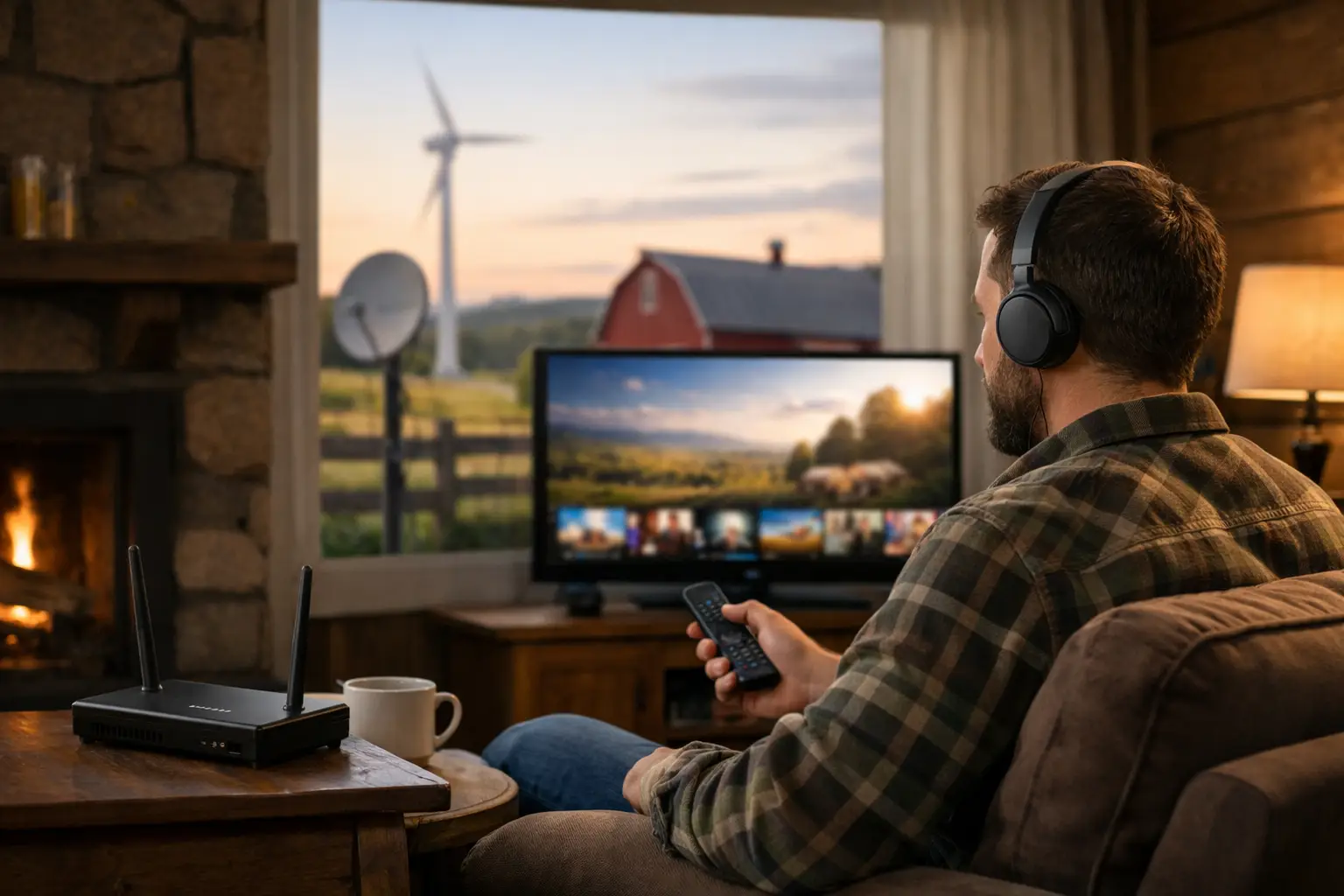
Friday night movie plans fall apart fast when the screen starts buffering right at the best scene. For many households outside major city centers, that leads to a fair question: can rural internet support streaming? The short answer is yes, in many cases it can. The better answer is that streaming performance depends on the speed available at your address, how many people are online at once, the quality setting you use, and how your home network is set up.
For families, remote workers, students, and small businesses in rural communities, streaming is no longer a luxury. It is part of everyday life. That includes Netflix and YouTube, but also live sports, video calls, IPTV, online learning, music, and cloud-based apps running in the background. Rural internet can handle that workload, but not every connection handles it the same way.
Can rural internet support streaming in real life?
In practical terms, yes, rural internet can absolutely support streaming if the service is fast enough and stable enough for your household’s habits. A single HD stream does not require extreme speeds. Even 4K streaming is possible on many modern rural internet plans, especially when the connection includes unlimited data and consistent evening performance.
The bigger issue is not whether streaming works at all. It is whether it works comfortably when real life is happening all at once. If one person is watching live TV, another is gaming, someone else is on a video meeting, and multiple phones are syncing in the background, your connection has a lot more to manage.
That is why the right internet plan matters more than broad promises. A rural household with a properly matched plan can enjoy smooth streaming without constantly lowering quality or waiting for content to load. A household on an older or undersized connection may still stream, but it will feel less reliable during busy hours.
What streaming actually needs from your internet
Streaming quality is driven by both speed and stability. Speed is the headline number people notice first, but stability is what keeps video from freezing, dropping resolution, or stopping to buffer.
For standard definition video, the internet demand is modest. HD needs more room, and 4K needs significantly more. Live streaming can also be less forgiving than on-demand video because there is less time for the app to preload content ahead of what you are watching.
As a general rule, a household should think beyond one device. If your TV needs bandwidth for streaming but the rest of the home is also online, your plan should cover the total demand, not just the TV. That is where higher-speed plans make a real difference. They give your home enough headroom so streaming remains smooth even when several devices are active.
Unlimited data matters too. Streaming can use a surprising amount of data over a month, especially for larger families or anyone who prefers HD or 4K quality. If your service includes strict data caps, streaming can become expensive or frustrating before the billing cycle ends.
The rural internet factors that make the biggest difference
The type of connection available in your area plays a major role. Some rural homes can access cable-based or fiber-adjacent services with strong speeds and dependable performance. Others may rely on fixed wireless or other coverage solutions where speeds vary more by location, signal conditions, and network demand.
Distance from infrastructure, terrain, tree cover, and the quality of in-home equipment can all affect performance. Two homes in the same rural region may have very different experiences based on what lines or wireless access options reach the property.
That is why coverage checks matter. The right answer is address-specific. Rural internet is not one-size-fits-all, and the best provider will be upfront about what speeds are actually available where you live.
Can rural internet support streaming for families?
For many families, the answer is yes, but the plan should match the household, not just the price tag. A couple who mostly watch one TV in the evening has very different needs than a home with kids streaming cartoons, teens watching YouTube, and parents using smart home devices and work apps.
A family that wants dependable streaming should pay attention to three things: download speed, unlimited usage, and router quality. If any one of those is weak, the whole experience can feel inconsistent.
A modern router can make a bigger difference than people expect. Sometimes the internet plan is fine, but the Wi-Fi signal is weak in the room where the TV is located. In that case, buffering is not really an internet availability problem. It is a home network problem. Better router placement, mesh Wi-Fi, or a wired connection to the main streaming device can solve a lot.
Streaming and remote work under the same roof
This is where trade-offs show up. Streaming by itself may work well, but adding remote work changes the picture. Video conferencing needs stable upload performance, not just download speed. If someone is on Zoom or Teams while another person is watching high-definition video, the connection needs enough capacity to do both without noticeable slowdown.
For home offices in rural areas, this is why reliable service matters as much as raw speed. A plan that performs consistently supports more than entertainment. It keeps work calls clear, file uploads moving, and cloud apps responsive while the rest of the household stays connected.
That is especially relevant across Southwestern Ontario, where more households now blend streaming, school, work, and home security on the same network every day. A practical provider should account for that reality instead of selling a plan based only on minimum use.
How to tell if your current service is enough
If streaming works sometimes but not others, look for patterns. If the problem is worst in the evening, network congestion or a plan with limited capacity may be part of the issue. If it only happens in one room, Wi-Fi coverage may be the problem. If it gets worse when several people are online, your household may simply need a faster package.
You should also pay attention to streaming quality settings. Many apps automatically adjust quality based on available bandwidth, which is helpful. But if everyone in the home prefers ultra-high-definition video, the internet demand rises quickly.
A good benchmark is whether your connection can handle your busiest hour, not your quietest one. If your household streams comfortably late at night but struggles after dinner, your setup may be too close to the edge.
What to look for in a rural streaming plan
The strongest rural internet plans for streaming are built around clear speed tiers, unlimited data, and dependable local support. Households should be able to choose a speed that fits one or two users, larger families, or heavier use such as gaming and multiple 4K streams.
Straightforward installation and coverage guidance also matter. Rural customers should not have to guess whether a service can meet their needs. A provider that understands the area, explains availability clearly, and offers support when setup issues come up saves time and frustration.
That is where a regional provider can stand out. S-Connect focuses on practical internet solutions for both town and rural customers, with plan options designed for modern connected homes instead of yesterday’s internet habits. For customers who also want TV, phone, mobile, or business services, having one provider can make things simpler from day one.
The honest answer: yes, but it depends on fit
Rural internet is fully capable of supporting streaming in many homes, but the right fit matters. The best results come from matching the available service to how your household actually uses the internet. If you stream casually, your needs may be modest. If your home runs multiple TVs, gaming consoles, smart devices, and remote work tools at once, you will want more speed and stronger Wi-Fi coverage.
The good news is that rural households have better options than many people assume. With the right plan, the right equipment, and clear expectations about usage, streaming in rural areas can feel every bit like a modern connected home should.
If your current setup leaves you watching the buffering icon more than the show, that is usually a sign to reassess the service, not to give up on streaming.